
Cuprins
- 1 What is kayaking?
- 2 Where are the best kayaking spots in Scandinavia?
- 3 Where can you find the best Mediterranean kayaking experiences, from Croatia to Greece?
- 4 What defines the best Atlantic coast kayaking routes in Europe?
- 5 Where are the best inland kayaking spots in Central Europe?
- 6 How to plan a kayaking holiday for beginners in Europe?
- 7 How to plan kayaking holidays for singles in Europe?
- 8 How to plan multi-day kayak trips in Europe?
- 9 How to apply these kayaking tips
- 10 FAQ about kayaking in Europe
Key takeaway for kayaking in Europe:
- Scandinavia: offers high-latitude paddling in Norway’s deep fjords, Sweden’s 30,000-island archipelago, and Iceland’s volcanic Westfjords.
- Mediterranean: features warm, high-visibility waters in Croatia’s Dalmatian Coast, Greece’s limestone sea caves, and Italy’s Amalfi Coast.
- Atlantic Coast: provides technical, tidal environments along Portugal’s Algarve and France’s rugged Brittany and Normandy shorelines.
- Central Europe: focuses on calm inland routes through Austria’s Alpine lakes, Germany’s Spreewald canals, and the urban waterways of the Netherlands.
- Specialized Trips: group tours in Greece/Portugal suit solo travelers, while the Danube Delta and Scotland’s Great Glen Trail are top picks for multi-day expeditions.
Read on to discover details about these kayaking locations and tips for kayaking excursions on European waters.
What is kayaking?
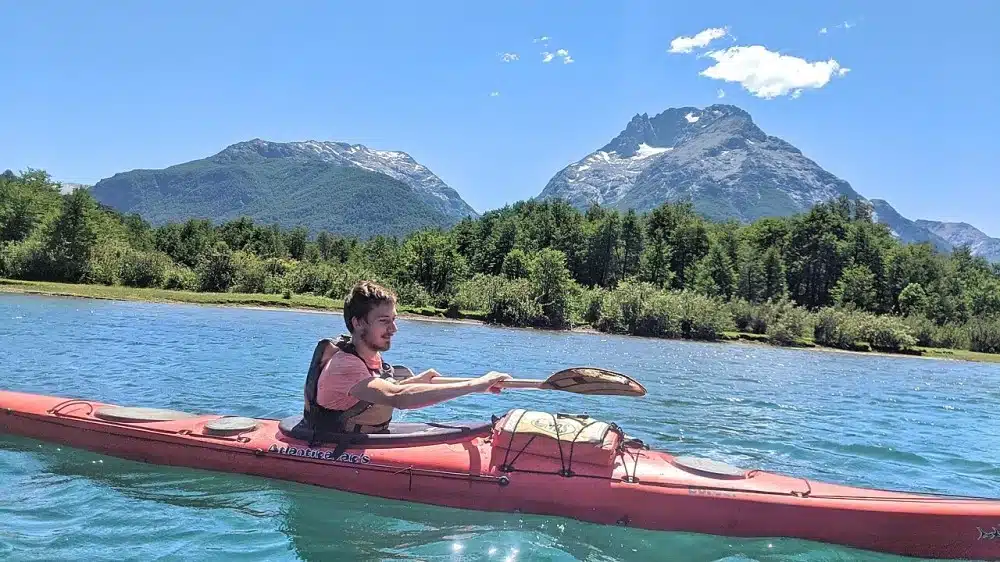
Kayaking on a lake in Europe
Kayaking is a water sport in which you paddle a small, narrow boat called a kayak using a double-bladed paddle. You sit facing forward with legs extended, unlike canoeing.
The sport combines physical exercise, balance, and nature exploration. It can be practiced on calm lakes, slow rivers, fjords, seas, or challenging whitewater.
In Europe, kayaking is especially popular thanks to diverse landscapes – from Norway’s fjords and Alpine rivers in Switzerland and Austria to the Danube Delta and Mediterranean coasts.
👉 Kayaking is just one way to explore the diverse inland and coastal waters found throughout Romania. See this ultimate guide to watersports in Romania for more details on rafting and river adventures.
The Scandinavian experience is defined by vertical cliff walls, waterfalls plunging directly into the sea, and a profound silence interrupted only by local wildlife.
Norway
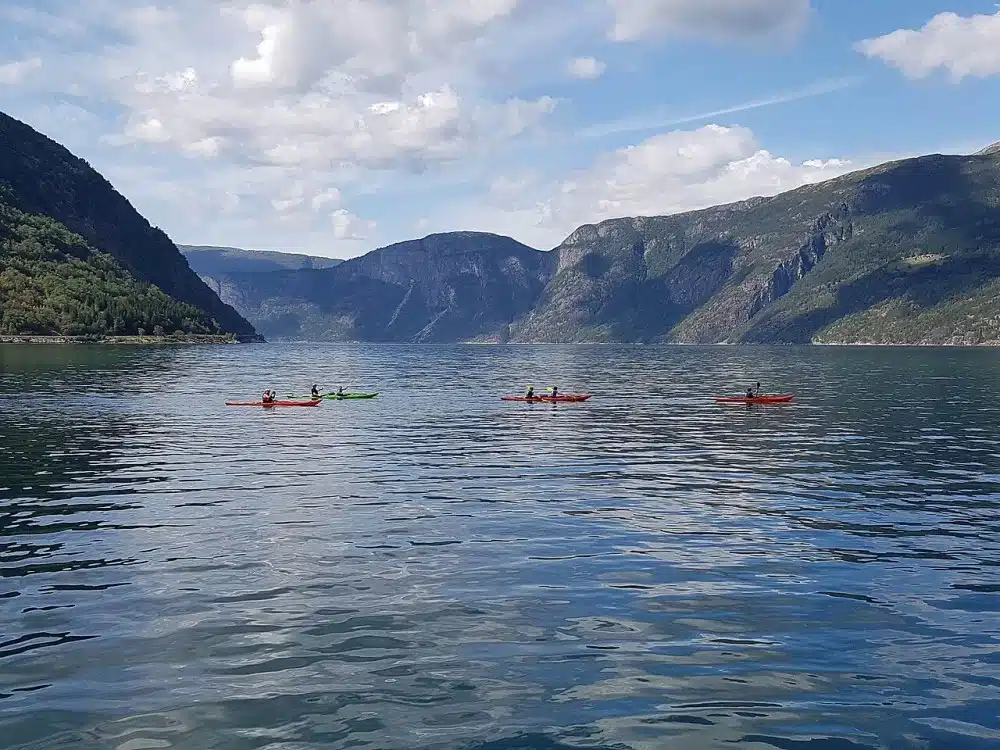
Kayaking in Norway
It stands as the centerpiece of Scandinavian paddling, featuring Sognefjorden and its spectacular UNESCO-listed arm, Nærøyfjord. The village of Gudvangen provides the ideal base for multi-day expeditions into this glacial heartland.
Sweden
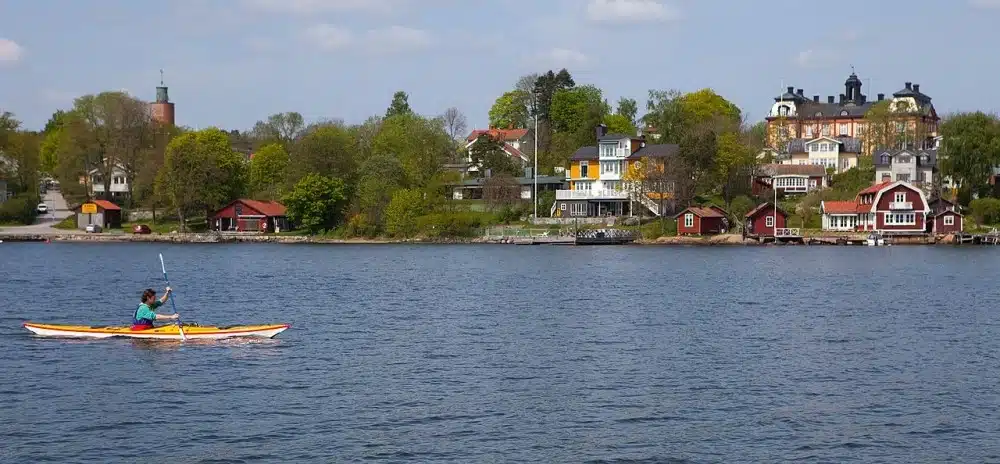
Kayaking in Sweden, at Vaxholm
The Stockholm archipelago offers a controlled, safe environment perfect for any skill level due to the sheltered Baltic waters. You can navigate through tens of thousands of uninhabited islets where the freedom to camp and sightings of ospreys turn the journey into an immersive experience under the midnight sun.
Iceland
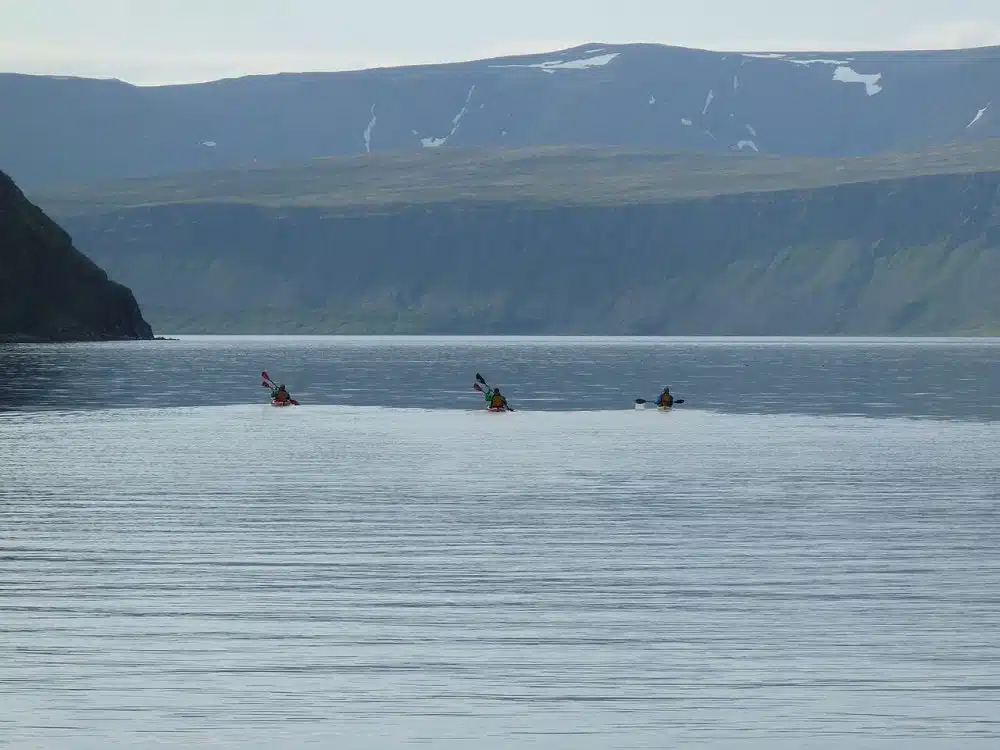
Kayaking in Iceland
Serves those seeking the elemental, featuring black sand beaches, basalt columns, and glaciers calving directly into the ocean. The Westfjords region is the most isolated and demanding, requiring rigorous preparation for shifting weather, yet it rewards paddlers with prehistoric landscapes and encounters with seals or whales.
Where can you find the best Mediterranean kayaking experiences, from Croatia to Greece?
The Mediterranean destinations are characterized by golden light, limestone cliffs, and warm, calm conditions that make the sea accessible for paddlers of all skill levels.
Kayaking on Croatia’s Dalmatian Coast
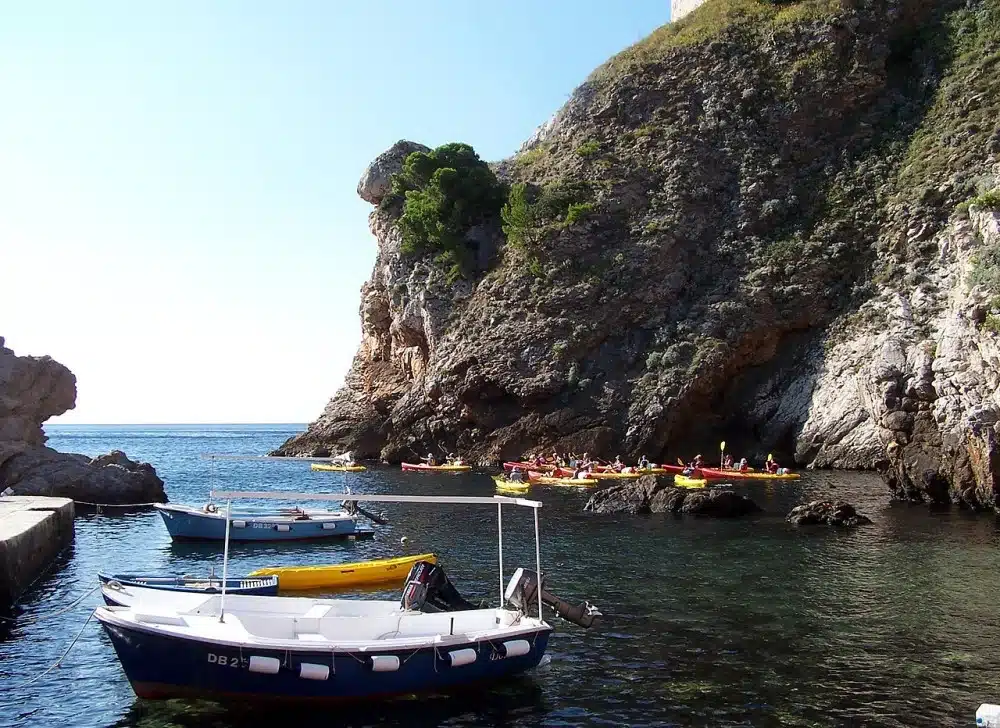
Kayaking in Croatia, at Dubrovnik
It remains a premier destination due to its thousand-island archipelago and the famously transparent waters of the Adriatic. Korčula Island and the Pelješac Peninsula stand out for their dense pine forests and medieval stone towns, offering sheltered channels that feel almost tropical.
Kayaking in Greece
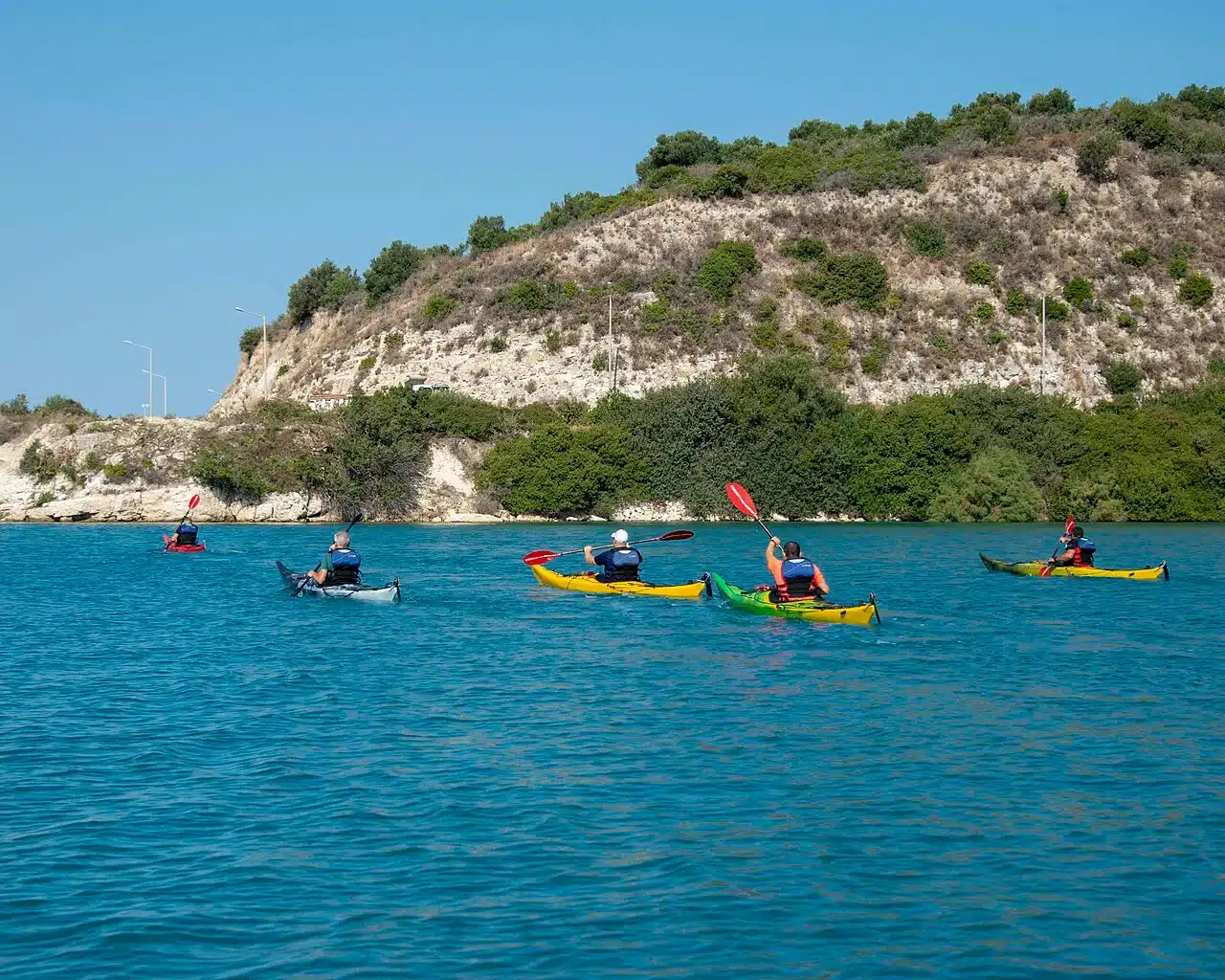
Kayaking in Greece
This country offers a more rugged and mystical landscape, specifically in the Ionian Sea around Kefalonia, where limestone bluffs and natural stone arches dominate the shore.
For a unique volcanic perspective, paddling the Santorini caldera allows you to see the famous white-washed cliffs and black volcanic sands of White Beach from a viewpoint inaccessible to most tourists.
Kayaking in Italy and Spain
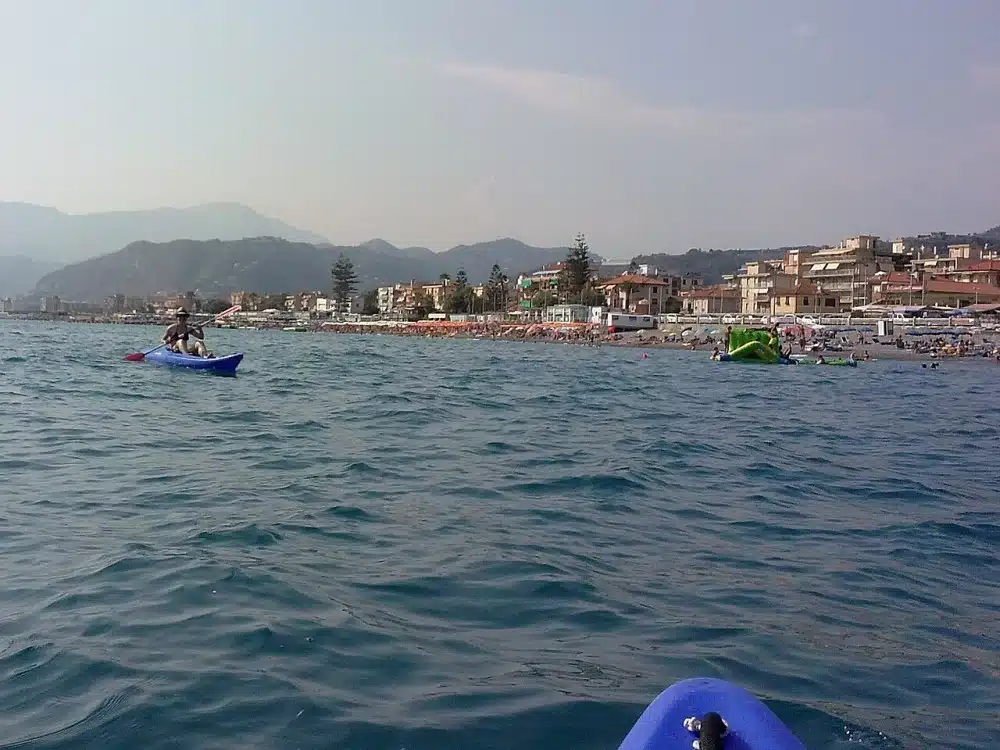
Kayaking in Italy, at Bordighera
Complete the Mediterranean circuit with the Amalfi Coast and the Costa Brava, both known for their welcoming conditions and dramatic coastal scenery.
These regions benefit from a long season, typically from May to October, ensuring reliable weather and warm water for multi-day coastal expeditions.
To plan your trip effectively, consider these technical and environmental factors:
- Most coastal hubs provide “sit-on-top” rentals for hourly use or specialized expeditions featuring high-performance carbon fiber sea kayaks.
- Underwater clarity regularly exceeds 20 meters, allowing for seamless transitions between paddling and snorkeling over reefs.
- Afternoon thermal winds like the Maestral are common, making early morning departures the standard for smoother crossings.
What defines the best Atlantic coast kayaking routes in Europe?
This region demands more technical skill than the Mediterranean due to significant tides and stronger swells.
Kayaking in Portugal’s Algarve coast
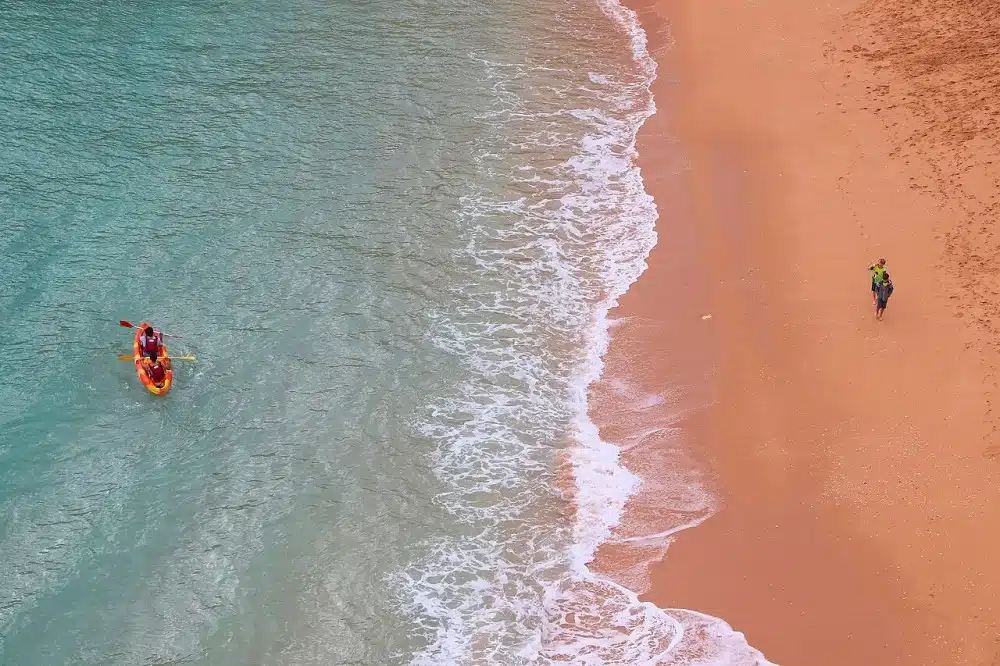
Kayaking in Portugal, Algarve coast
Serves as the premier destination for cave exploration, particularly around Carvoeiro. The Benagil Cave is the highlight, featuring a natural skylight and dual sea entrances that flood the interior with golden light, accessible only by water.
Kayaking in France
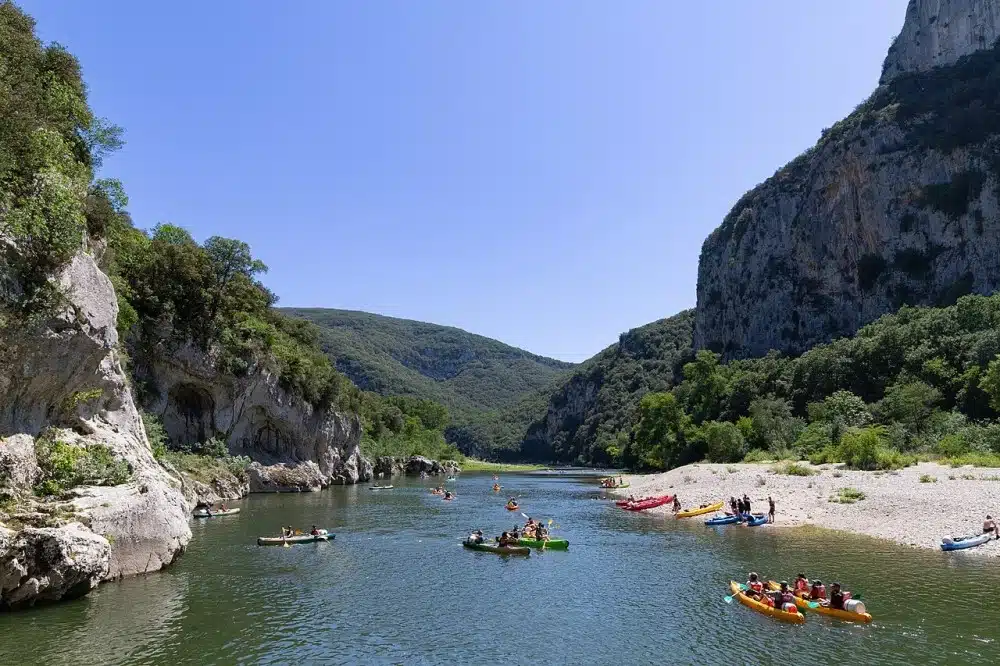
Kayaking in France, on Ardèche river
The French coast provides a diverse landscape ranging from the complex, tidal headlands of Brittany to the historical weight of the Normandy beaches.
For those seeking a shift from the open sea, the Dordogne and Ardèche rivers offer inland alternatives through deep gorges and past medieval villages.
To optimize your Atlantic expedition, keep these environmental factors in mind:
- Brittany and Normandy experience significant tidal ranges that require precise trip timing and local chart knowledge.
- Entering formations like Benagil is safest during low tide and calm sea states to avoid dangerous swells against the rock.
- Late spring and early autumn offer the best balance between manageable swell heights and comfortable air temperatures.
Where are the best inland kayaking spots in Central Europe?
These inland routes offer a serene, intimate alternative to coastal kayaking.
Kayaking in Austria’s Lake District
Lake Hallstatt particularly, provides one of Europe’s most picturesque environments. Renting a kayak in Bad Goisern allows you to approach the village of Hallstatt by water, bypassing road crowds and capturing the iconic skyline from the center of the lake.
Kayaking in Germany
The country features an extensive network of interconnected rivers and UNESCO Biosphere Reserves like the Spreewald. Whether you choose the Rhine, the Moselle, or the quiet Bavarian streams, the infrastructure supports everything from quick afternoon trips to multi-day expeditions.
Kayaking in The Netherlands
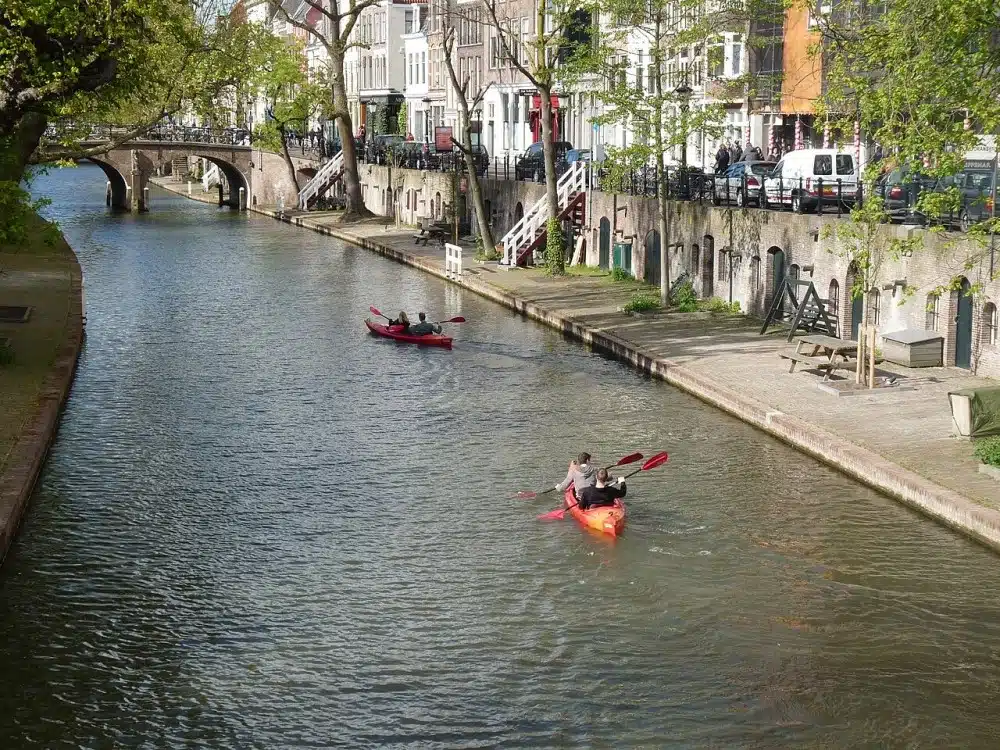
Kayaking in the Netherlands, Utrecht
It is known for urban kayaking, with Amsterdam and Rotterdam providing miles of navigable canals. The sheer density of the Dutch canal and lake system means you can design endless routes that never repeat the same scenery.
To help you choose the right environment, consider these practical details:
- Most inland spots feature frequent entry/exit points and rentals directly in village centers.
- Amsterdam and Rotterdam canals require awareness of commercial tour boat traffic and specific right-of-way norms.
- While lakes are static, rivers like the Rhine have commercial traffic and currents requiring basic navigation skills.
European Kayaking Regions Comparison
| Region | Scenery | Water Conditions | Best Season | Skill Fit |
| Scandinavia | Fjords & Waterfalls | Sheltered but cold | June–September | All (Advanced for Iceland) |
| Mediterranean | Limestone & Islands | Warm, clear, calm | May–October | Beginners to Intermediate |
| Atlantic | Cliffs & Sea Caves | Powerful swells & tides | Spring / Autumn | Intermediate to Advanced |
| Central Europe | Alpine Lakes & Canals | Calm & gentle flow | Late Spring–Early Autumn | All Levels |
How to plan a kayaking holiday for beginners in Europe?
You can start a kayaking holiday for beginners in the sheltered Adriatic channels or the calm Baltic archipelagos, which provide the most forgiving conditions for first-time paddlers.
- Croatia: features warm, transparent waters and professional guides in Dubrovnik or Split who provide stable, wide kayaks and basic technical instruction.
- Sweden: the Stockholm archipelago offers thousands of islands that block wind and waves, ensuring the water remains flat and safe for learning.
- Austria: Lake Hallstatt provides a wave-free environment with no tides, ideal for mastering paddle strokes before attempting coastal waters.
How to plan kayaking holidays for singles in Europe?
You can experience kayaking holidays for singles by joining organized group tours that balance individual freedom with a built-in community of like-minded travelers.
- Greece: offers a vibrant group tour culture across the Ionian and Aegean islands, where shared experiences like exploring sea caves create natural social connections.
- Portugal: the Algarve coast is a hub for solo travelers, combining dramatic limestone scenery with well-developed guided expeditions that welcome individual joiners.
- Sweden: the Stockholm archipelago provides a more meditative setting, where calm waters and long summer daylight allow for safe, reflective solo paddling or small-group interaction.
👉 Beyond the Delta, the Black Sea coast offers a mix of volcanic landscapes and expansive sandy beaches. Find out more about the Black Sea coast of Romania to find the best spots for coastal paddling and relaxation.
How to plan multi-day kayak trips in Europe?
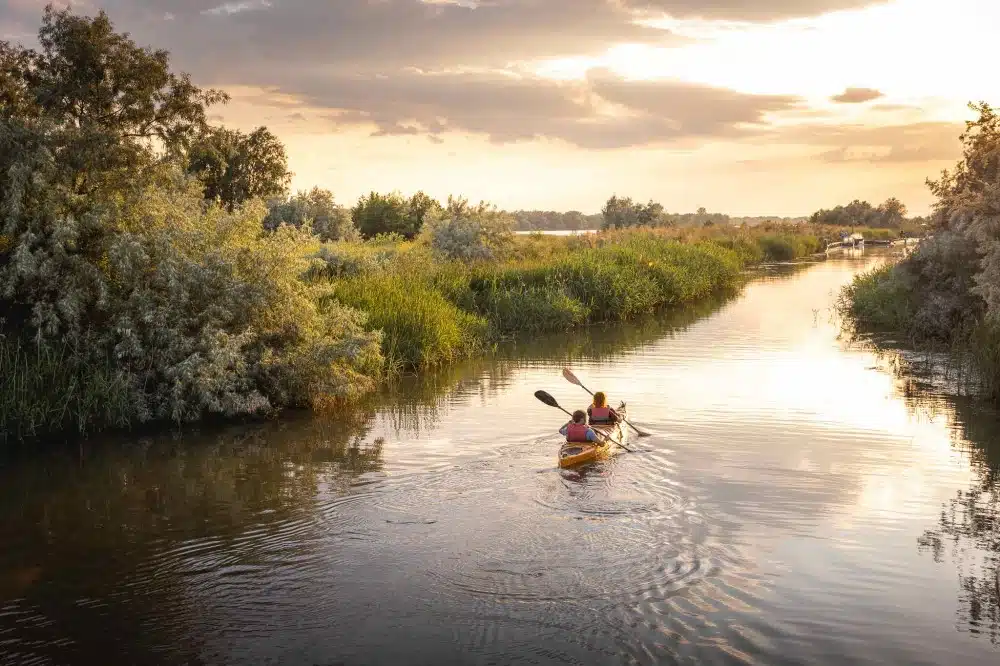
Kayaking in Danube Delta
You can opt for multi-day kayak trips to access remote landscapes that are unreachable during shore excursions, moving at the natural pace of a paddle stroke.
- Norway: offers the gold standard for expeditions in Nærøyfjord, where you can spend a week camping on the fjord shores beneath 1,700-meter peaks.
- Scotland: The Great Glen Canoe Trail provides a classic route through lochs and canals from Fort William to Inverness, crossing the dramatic Highland landscape.
- Croatia: ideal for island-hopping along the Dalmatian Coast, with the flexibility to combine wild camping on remote beaches with stays in traditional guesthouses.
- Romania: The Danube Delta offers a unique UNESCO-protected wetland experience, where you navigate a labyrinth of reed-lined channels and lily-covered lakes far from any tourist crowds.
👉 The Danube Delta offers a unique wetland experience where you can navigate reed-lined channels, far from the crowds. Discover these nature-focused experiences at Dolphin Camping to complete your Romanian water adventure.
How to apply these kayaking tips
- Research local weather and tide charts.
- Book a guided tour for your first session.
- Check seasonal availability for the Benagil Cave or Blue Cave.
- Pack waterproof gear and dry bags.
- Verify permit requirements for protected inland areas.
- Rent stable “sit-on-top” kayaks if you are planning an urban exploration.
👉 Multi-day expeditions often require a reliable base camp where you can rest between paddling sessions. Choose the right accommodation at Dolphin Camping for your stay near the Black Sea and the Delta.
FAQ about kayaking in Europe
Do you need a permit to use a kayak in Europe?
In most European countries, no license is required for non-motorized vessels, though specific Alpine lakes or nature reserves may charge a small environmental access fee.
Is it mandatory to wear a life jacket while paddling?
Wearing a buoyancy aid is legally required in most European jurisdictions and is a critical safety measure regardless of swimming ability.
Due to the cold water temperatures in Norway or Iceland, using a wetsuit or a dry suit is indispensable to prevent hypothermia in case of an accidental capsize.
Can you kayak in Europe year-round?
While the Mediterranean allows for winter sessions, the optimal season is May to October; outside this window, strong winds and low temperatures make navigation hazardous for amateurs.
Image source: Dolphin Camping, Wikimedia Commons