
Cuprins
- 1 Why is Romania Europe’s Last Wildlife Frontier?
- 2 What is the Carpathian Wolf?
- 3 2. What makes Romania Europe’s largest brown bear habitat?
- 4 3. Which Facts Define the Elusive Romanian Lynx?
- 5 4. Where Can You Experience Wildlife Up Close in Romania’s National Parks?
- 6 5. Why is the Danube Delta a Birdwatcher’s Paradise?
- 7 How Should You Plan Your Romanian Wildlife Adventure?
- 8 Which Steps Should You Take to Plan Your Romanian Wildlife Journey?
- 9 FAQs About Romania’s Unique Wildlife
- 9.1 Can you see pelicans anywhere else in Europe in such large numbers?
- 9.2 Are Romanian wolves and bears more aggressive than those in North America?
- 9.3 What makes the European bison’s presence in Romania a conservation milestone?
- 9.4 Why is the Danube Delta considered a “living museum” of biodiversity?
- 9.5 How does the Romanian climate affect wildlife visibility throughout the year?
What you need to know in brief about Romania’s extraordinary wildlife:
- Romania is a premier destination for wild encounters, hosting Europe’s largest brown bear population, the elusive lynx, and social wolf packs within the untamed Carpathian wilderness.
- The country’s diverse network of national parks provides a sanctuary for apex predators and rare species like the European bison.
- The Danube Delta stands as a world-class birdwatching paradise, supporting over 300 bird species and unique aquatic life across its vast, UNESCO-protected wetlands.
- Successful exploration relies on booking conservation-minded guided tours and timing visits during peak activity seasons in spring and autumn.
Read on to discover the most exciting facts about these iconic species, the best locations for sightings, and how to plan a responsible journey into the wild.
Why is Romania Europe’s Last Wildlife Frontier?
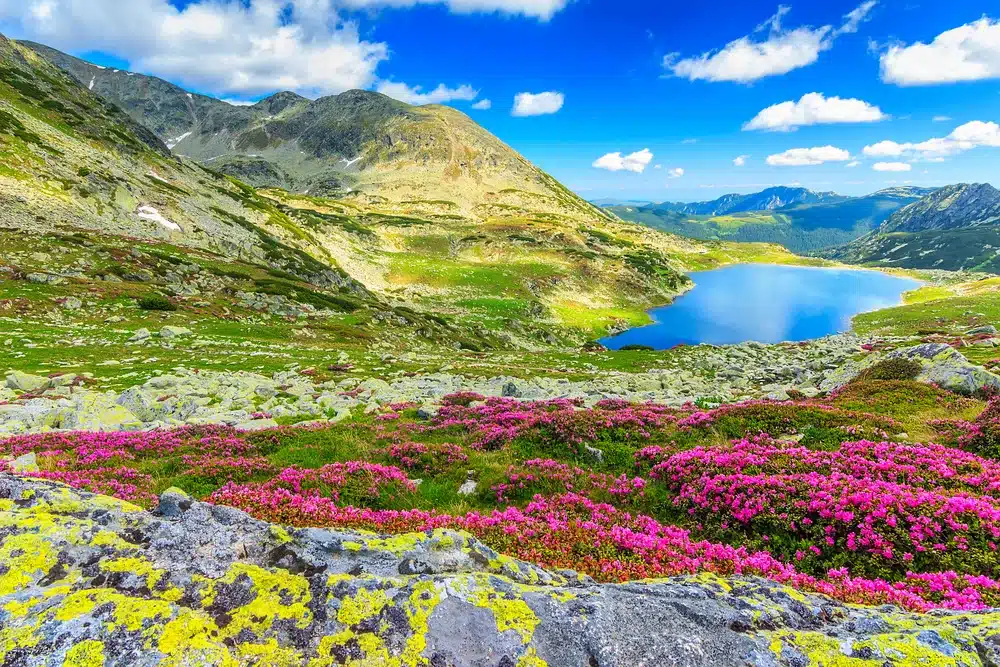
Carpathians Mountains in Romania (Retezat National Park)
Romania stands as a premier destination for those seeking immersive journeys into Europe’s last great wilderness, where nature reigns supreme across more than 4,100 square kilometers. This vastness is defined by the unique geological and biological features that allow the country’s untamed spirit to thrive:
- Mountain corridors: The Carpathian arc provides sweeping temperate forests where apex predators like the wolf roam freely.
- Wetland labyrinths: The Danube Delta’s lily-covered lakes and channels create a vital system for hundreds of bird species.
- Ancient biodiversity: Immersive landscapes offer rare opportunities to track wildlife through some of the continent’s most ancient forests.
- Unspoiled terrain: The interconnected wild spaces preserve traditional environments where the call of the wild is still heard loud and clear.
-
What is the Carpathian Wolf?
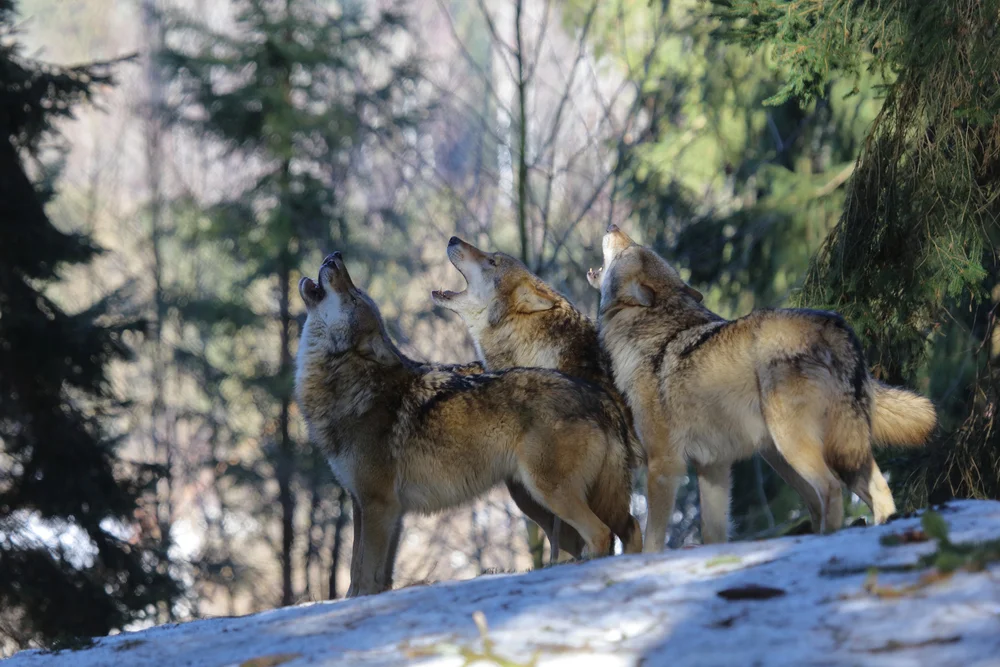
Wolves during winter in the Carpathians
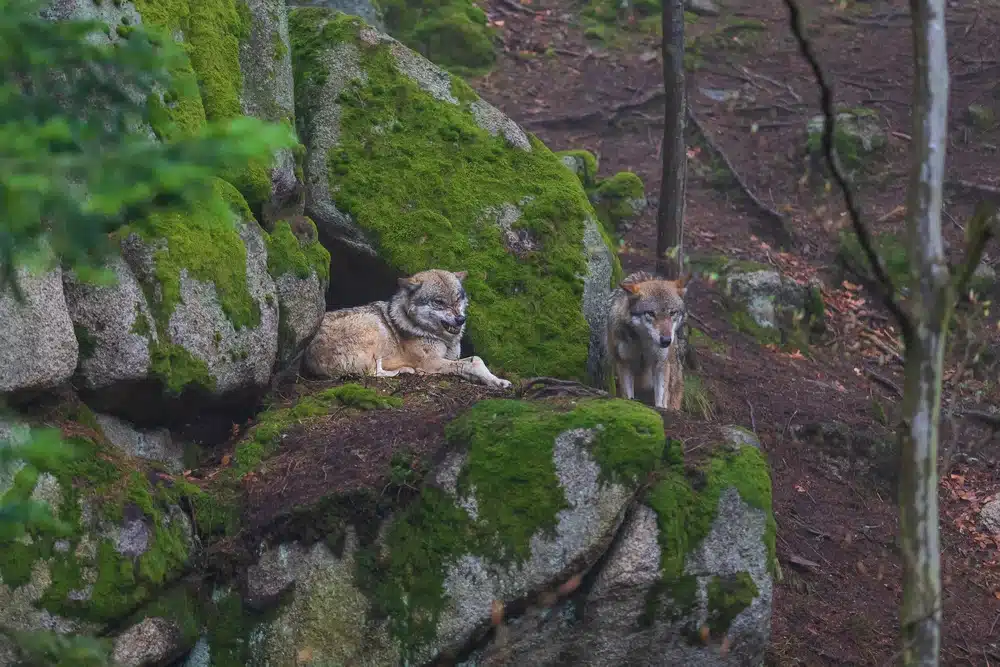
As a keystone species, the Carpathian wolf (Canis lupus) maintains the health of Romania’s river systems and forests by regulating prey populations like deer and wild boar.
These deeply social predators live in family packs and patrol massive territories across Transylvania’s mountain ranges, though their natural wariness makes rare wild encounters a truly life-changing experience.
How to Track Carpathian Wolves in Romania
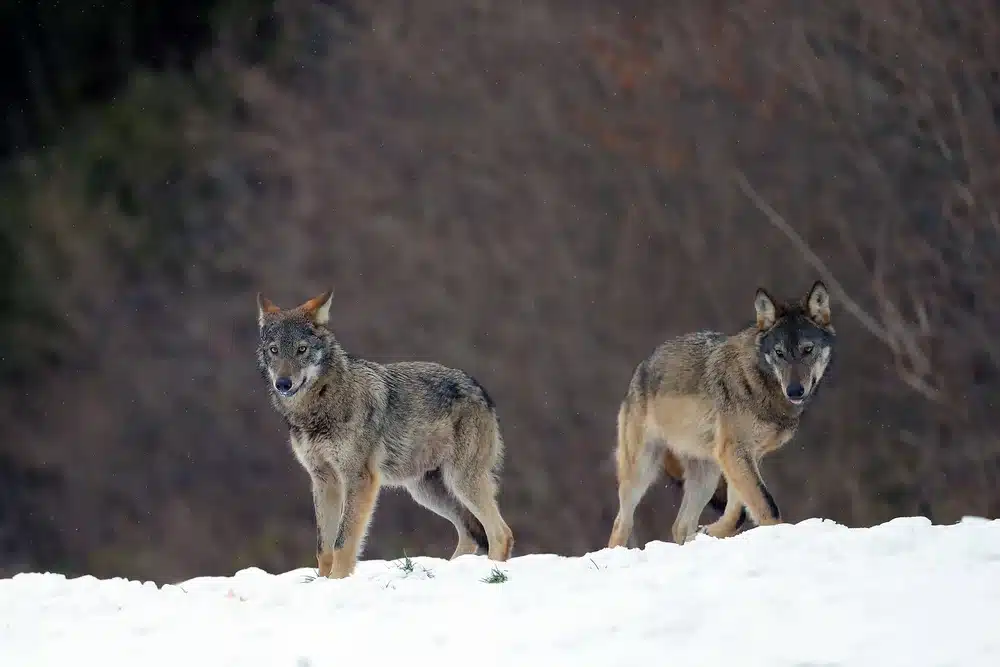
Grey Carpathian wolves in natural habitat
Successful tracking requires a blend of expert guidance and respect for the natural environment to observe these elusive predators safely:
- Join expeditions led by local guides who support conservation-minded operators.
- Head into the forest at dawn or dusk when wolf activity is most frequent.
- Look for fresh prints in soft earth or territorial markings on tree bark.
- Monitor the valleys as dusk settles to hear the sound of distant howling.
2. What makes Romania Europe’s largest brown bear habitat?
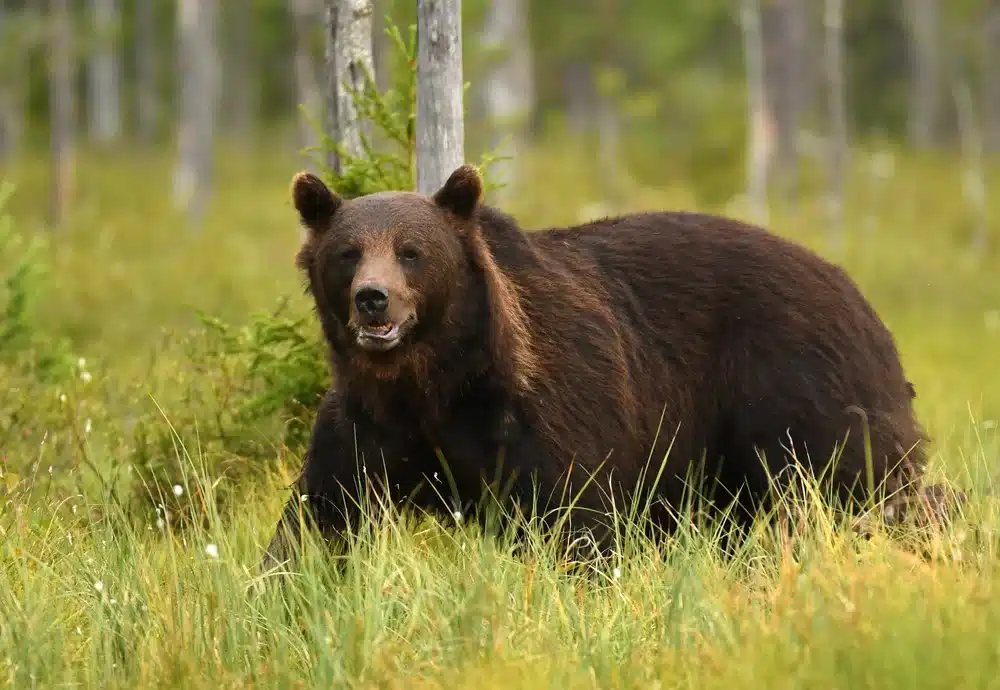
Brown bear in the Carpathian Mountains
The Carpathian Mountains support Europe’s largest population of brown bears (Ursus arctos) by providing dense cover, abundant food, and massive territories.
These omnivores serve as vital ecological engineers that signal a healthy wilderness by dispersing seeds and regulating prey populations across Romania’s vast mountain forests.
What are the Best Practices for Bear Watching in Romania?
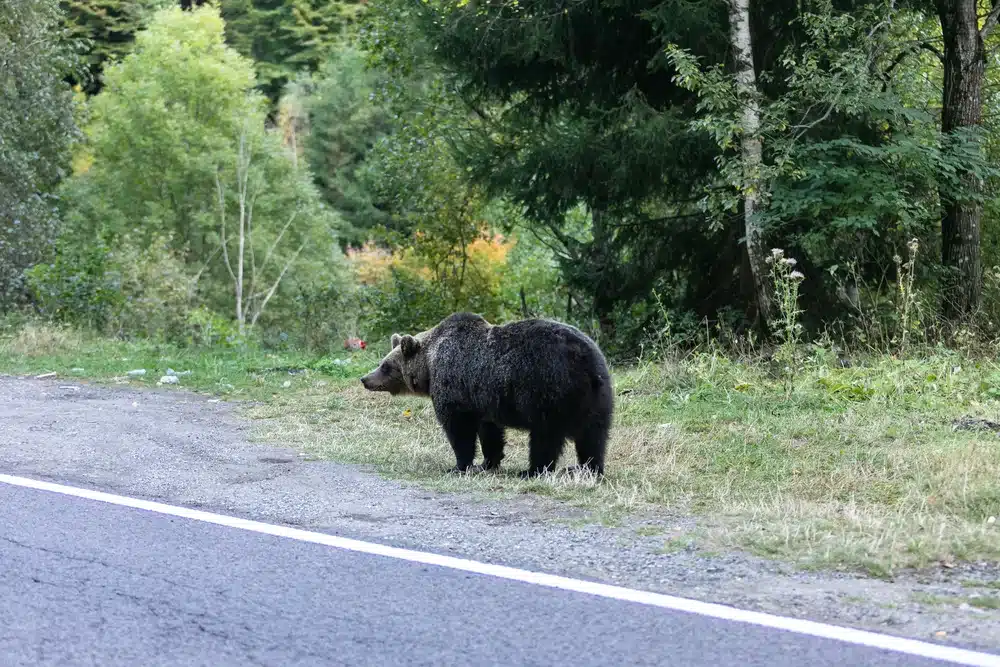
Responsible observation focuses on safety and conservation to ensure these magnificent animals remain wild and undisturbed:
- Book guided sessions with specialists who use purpose-built hides near natural feeding areas.
- Remain patient and keep a respectful distance to allow bears to exhibit natural behaviors.
- Never attempt to feed or approach bears alone, as this is dangerous and harmful to their wellbeing.
- Select conservation-minded guides and strictly adhere to local wild camping and safety regulations.
👉 Inform yourself about the regulations and best practices for wild camping in Romania to ensure your stay in nature is safe and respectful of the environment.
3. Which Facts Define the Elusive Romanian Lynx?
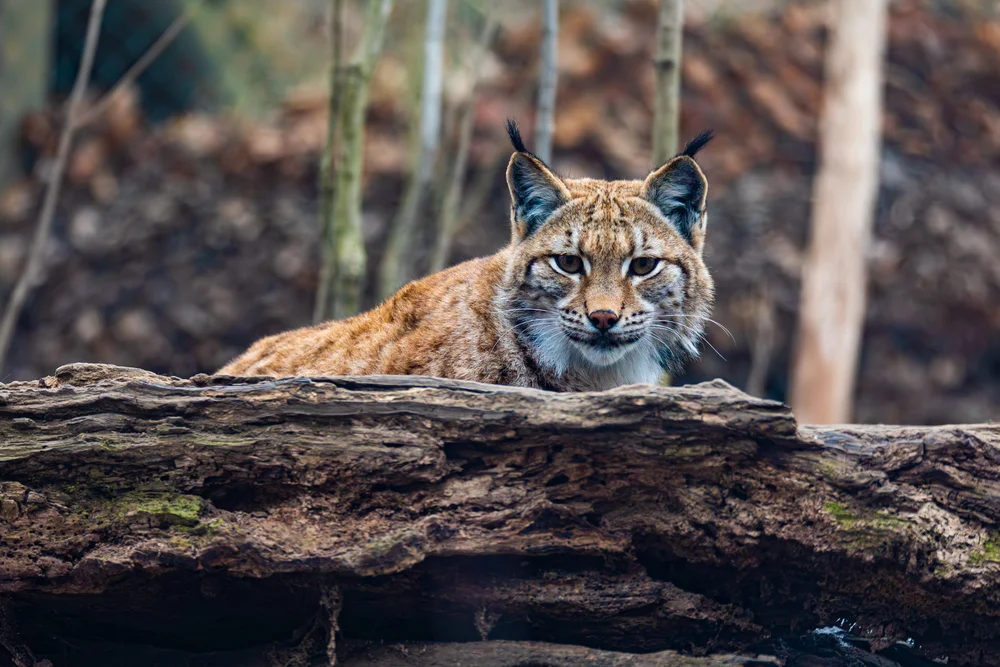
Carpathian lynx
The Eurasian lynx (Lynx lynx) is Romania’s most secretive predator, a solitary hunter that stalks roe deer through dense, rocky terrain under the cover of darkness.
This “ghost of the forest” is part of an ecologically complete community that includes the secretive wildcat, the adaptable golden jackal, and the recently rewilded European bison.
Together, these species maintain a perfect natural balance, making the Carpathian mountains one of the last places in Europe where such a diverse predator guild still thrives.
What Makes the Eurasian Lynx So Difficult to Spot in Romania?
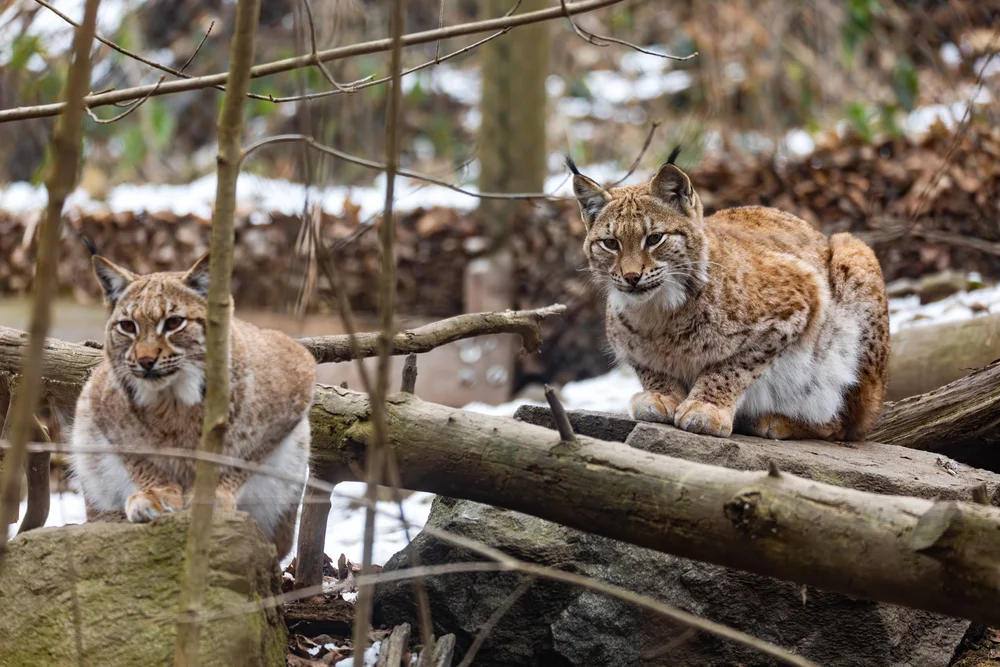
Carpathian lynxes in forest
Despite Romania supporting one of the continent’s strongest populations, the lynx remains a master of concealment with an almost supernatural ability to vanish:
- They favor areas with thick undergrowth and natural cover that make them virtually invisible.
- These solitary cats move silently through dense forest and rocky terrain to avoid detection.
- Most of their activity occurs at night, significantly reducing the chances of a face-to-face encounter.
- Specialists often rely on camera trap footage to document their presence deep in the wilderness.
4. Where Can You Experience Wildlife Up Close in Romania’s National Parks?
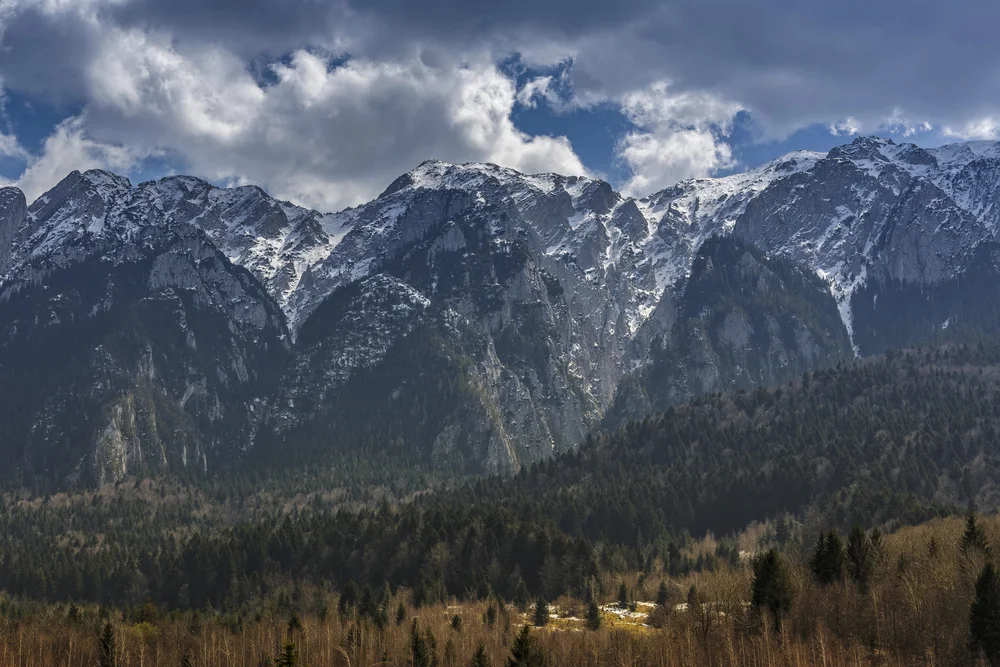
Bucegi National Park
Romania’s protected areas span diverse habitats from high alpine peaks to coastal wetlands, offering unparalleled opportunities to witness rare species in their natural environment:
| National Park | Key Wildlife | Landscape | Best For |
| Retezat National Park | Bears, wolves, chamois | Glacial lakes, rocky peaks, ancient forest | Serious wildlife trackers seeking pristine wilderness |
| Piatra Craiului National Park | Large carnivores, chamois | Dramatic limestone ridge | Large carnivore tracking and hiking |
| Bucegi Natural Park | Carpathian fauna | Accessible mountain terrain | Visitors seeking genuine encounters with easier access |
| Danube Delta | 300+ bird species, otters, European mink, wild boar | Wetland channels, reed beds, lily-covered lakes | Birdwatching and open-water wildlife exploration |
👉 Learn what virgin beaches in Romania you can visit, where the coastal ecosystem meets the sea in an unaltered natural setting.
To ensure both safety and the highest probability of spotting elusive animals, visitors should prioritize guided tours led by local experts who can interpret the complex landscape and its unique flora and fauna.
5. Why is the Danube Delta a Birdwatcher’s Paradise?
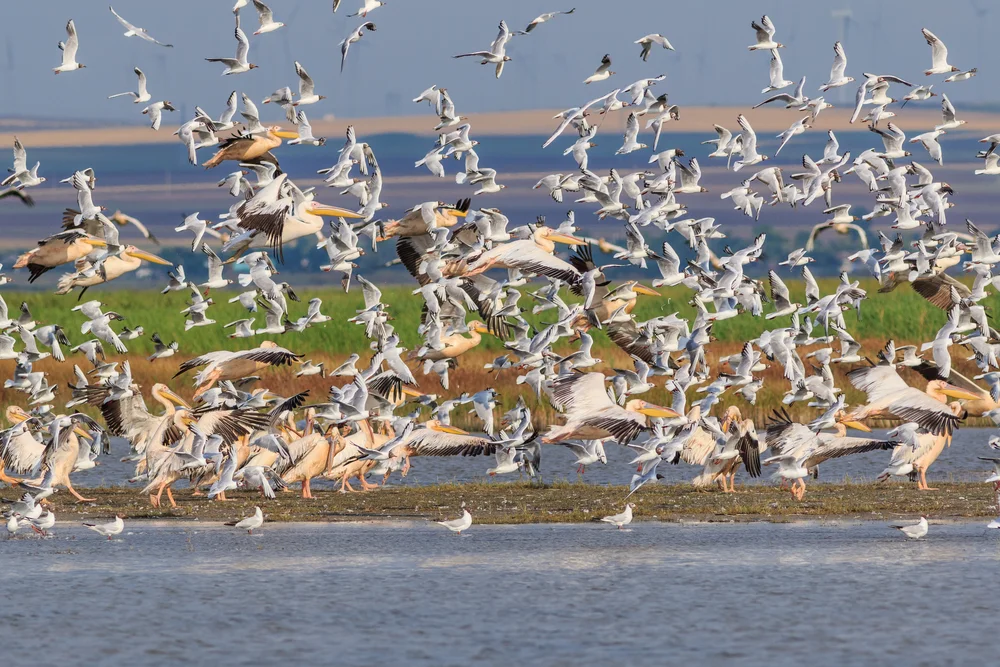
Pelicans in Danube Delta
Spanning approximately 5,800 square kilometers where the great river meets the Black Sea, the Danube Delta hosts one of the world’s most diverse bird communities.
Beyond its avian residents, the Delta’s ecosystems support species like the Danube sturgeon, European pond turtles, and river otters, with peak activity occurring during the spring and autumn migrations.
What Wildlife Can You See in the Delta?
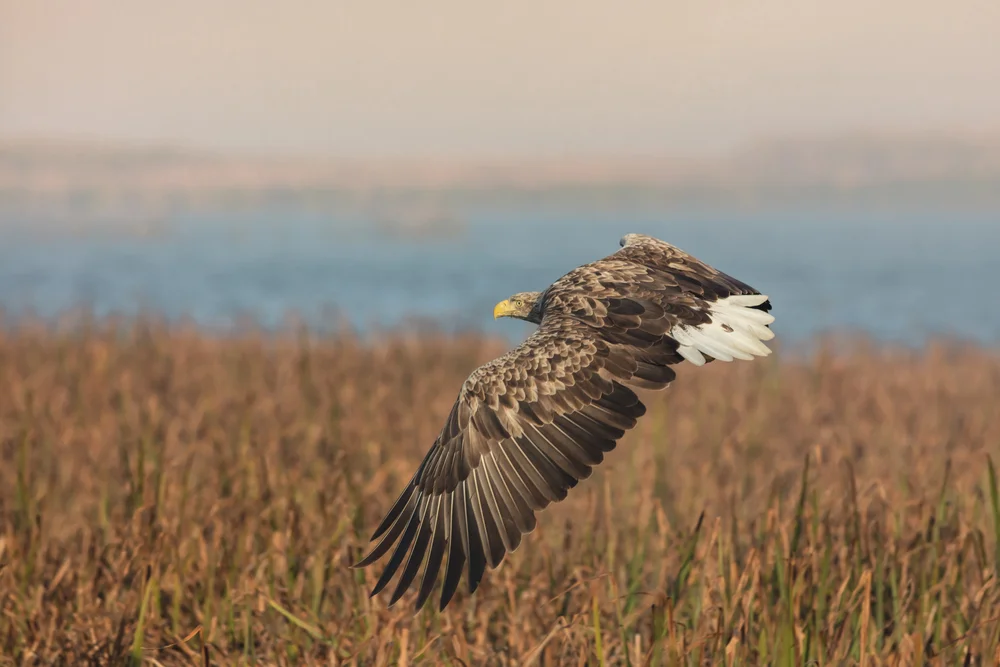
White-tailed eagle in Romanian Danube Delta
The delta serves as a vital sanctuary for both rare residents and spectacular migratory waves throughout the year:
- Rare Nesters: Significant numbers of rare Dalmatian pelicans and secretive pygmy cormorants inhabit the reed-lined channels.
- Majestic Raptors: White-tailed eagles, among Europe’s largest birds of prey, hunt across the open waterways.
- Wading Colonies: Striking glossy ibises, herons, and egrets form vast nesting colonies within the wetland vegetation.
- Migratory Waves: Enormous numbers of species pass through from April to June and again from August to October.
👉 Consult the list of nature experiences offered by Green Dolphin Camping to plan guided birdwatching expeditions and incursions into the wild zones of the reserve.
How Should You Plan Your Romanian Wildlife Adventure?
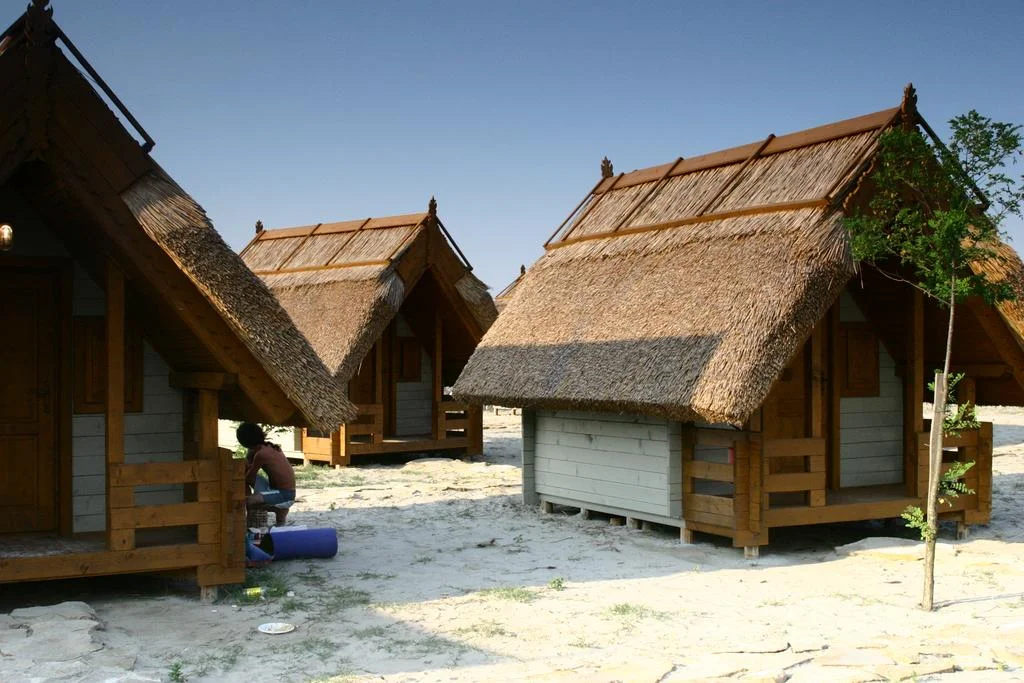
Bungalows at Green Dolphin, Danube Delta
Romania offers a wildlife experience unlike any other in Europe, but making the most of your journey requires patience and preparation:
- Prioritize guided tours: Opt for conservation-focused operators to ensure responsible viewing and more rewarding sightings.
- Time your visit: Choose spring or early autumn when nature is most active to maximize your wildlife encounters.
- Support conservation: Select sustainable operators to ensure your visit helps protect Romania’s wilderness for future generations.
- Book a dedicated base: Use locations like Green Dolphin Camping in Sfântu Gheorghe for direct access to the Biosphere Reserve.
👉 Explore accommodation options at Green Dolphin Camping that offer a balance between comfort and proximity to the natural habitats of the Danube Delta.
Which Steps Should You Take to Plan Your Romanian Wildlife Journey?
- Select local specialists for tracking predators in the Carpathians or birds in the Delta.
- Ensure you have the required environmental passes for protected national parks and biosphere reserves.
- Visit between April and October for the best weather and highest wildlife activity.
- Stick to marked trails in bear country and use professional hides for observation.
- Bring sturdy hiking boots, binoculars, and insect repellent for both forest and wetland environments.
- Book with sustainable operators who reinvest in protecting Romania’s natural habitats.
FAQs About Romania’s Unique Wildlife
Can you see pelicans anywhere else in Europe in such large numbers?
The Danube Delta hosts the largest breeding colonies of great white pelicans in Europe, making it the continent’s most significant sanctuary for these prehistoric-looking birds.
Are Romanian wolves and bears more aggressive than those in North America?
Romanian carnivores are generally more accustomed to human proximity through centuries of coexistence, yet they remain extremely wary and avoid human contact whenever possible.
What makes the European bison’s presence in Romania a conservation milestone?
After disappearing from the region for over 200 years, their successful reintroduction into the Carpathian wild is restoring ancient grazing patterns, essential for forest health.
Why is the Danube Delta considered a “living museum” of biodiversity?
It is the best-preserved delta in Europe, constantly growing through silt deposits and providing a unique habitat for species that have vanished elsewhere on the continent.
How does the Romanian climate affect wildlife visibility throughout the year?
The distinct four seasons dictate animal movement, with deep winter snows forcing large mammals into lower valleys, providing unique tracking opportunities for winter visitors.
Photo source: Dolphin Camping, DepositPhotos