
Cuprins
- 1 Why the Danube Delta Deserves a Spot on Your Bucket List
- 2 What is the Danube Delta Biosphere Reserve and Why is Its Ecosystem Unique?
- 3 How to Get to the Danube Delta and Manage Your Travel Logistics?
- 4 When Is the Best Time to Visit the Danube Delta and for How Long?
- 5 What Can You See During a Danube Delta Wildlife Watching Session?
- 6 Which Are the Must-Visit Villages and Landmarks?
- 7 How Do You Choose the Right Danube Delta Tour for Your Adventure Style?
- 8 What Other Activities Can You Enjoy?
- 9 Which Are the Best Danube Delta Accommodation Options?
- 10 How Should You Prepare for a Danube Delta Trip?
- 11 How to Apply These Practical Tips
- 12 FAQs About Visiting the Danube Delta
- 12.1 What are the specific camping regulations for tourists bringing their own tents?
- 12.2 What emergency medical transport options are available inside the delta?
- 12.3 Is it allowed to bring pets into the reserve and on boats?
- 12.4 How do electricity and internet connectivity work in remote delta villages?
- 12.5 Are there any specific seasonal health risks like malaria or tick-borne diseases?
What you need to know briefly about visiting the Danube Delta:
- The Danube Delta offers a unique landscape where you can choose between specialist birdwatching tours, cultural immersion or independent kayaking through narrow channels.
- Beyond boat trips, you can engage with nature through recreational fishing, hiking or relaxing on remote beaches in Sfântu Gheorghe.
- Accommodation varies from practical hotels and traditional family guesthouses in the heart of the Delta to upscale resorts and wild campsites under the stars.
- Successful trips require essential gear like waterproof jackets and binoculars, mandatory ARBDD permits, and carrying cash in Lei, as card payments are rare in remote villages.
Read on to discover the specific details of each tour type, how to organize your activities, and which accommodation best suits your adventure style for a memorable holiday.
Why the Danube Delta Deserves a Spot on Your Bucket List
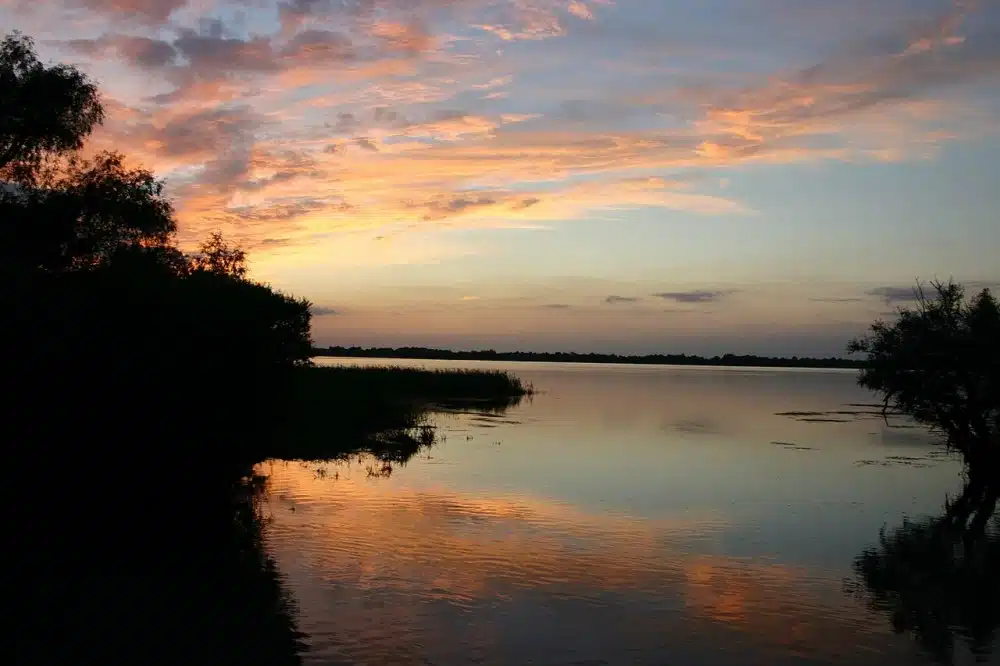
Sunset in Danube Delta
The Danube Delta represents Europe’s second-largest river delta and a vital wetland system, offering a unique blend of biodiversity and genuine remoteness across over 4,100 square kilometers.
This UNESCO Natural Heritage site stands out through several defining characteristics:
- Home to over 360 bird species and 1,150 plant species, ranking third globally behind the Great Barrier Reef and Galápagos.
- Many areas remain accessible only by boat, preserving traditional villages and ancient fishing practices along the canals.
- A unique mix of Lipovan, Ukrainian, Turkish and Romanian communities, offering extraordinary local gastronomy based on fresh fish.
- The eastern edge features some of the most unspoiled and wild beaches found anywhere on the Black Sea.
What is the Danube Delta Biosphere Reserve and Why is Its Ecosystem Unique?
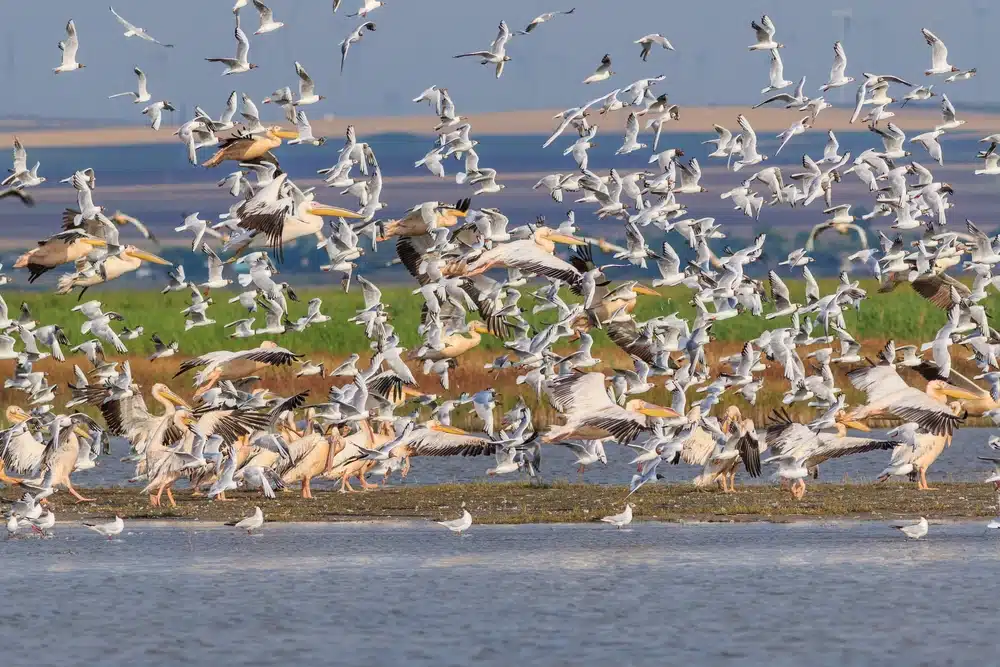
Pelicans in Danube Delta
The Danube Delta Biosphere Reserve is a UNESCO-protected wetland, managed by the ARBDD, formed where the Chilia, Sulina, and Sfântu Gheorghe branches meet the Black Sea.
It functions as a complex mosaic of habitats that supports staggering biodiversity through a delicate balance of freshwater systems and brackish coastal lagoons.
The integrity of this ecosystem is maintained through several distinct natural features and conservation zones:
- Expansive reed beds: These provide essential nesting grounds for birds, act as fish spawning shelters, and serve as a natural water filtration system.
- Ancient subtropical forests: The Letea and Caraorman reserves host 500-year-old oaks, Mediterranean creepers, wild horses, and white-tailed eagles.
- Diverse aquatic networks: A system of lakes and channels supports 75 fish species, utilizing salinity gradients to sustain varied biological communities.
- Layered protection zones: Management includes strictly protected areas, buffer zones for science, and economic zones for sustainable tourism and fishing.
How to Get to the Danube Delta and Manage Your Travel Logistics?
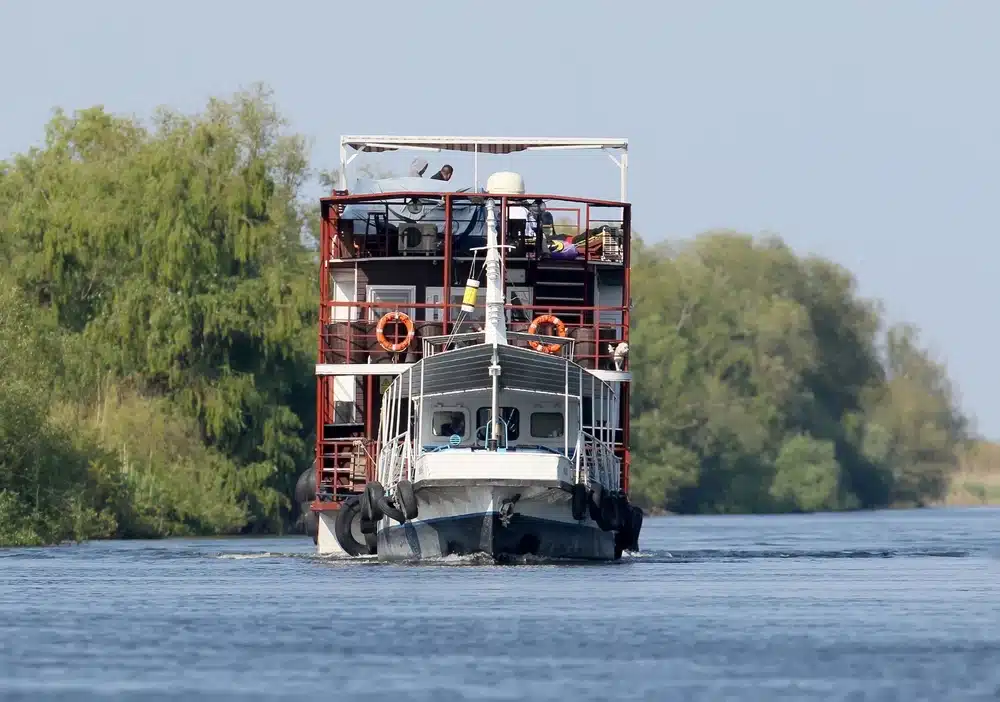
Boat for tourists in Danube Delta - Romania
To reach the Danube Delta, you must first travel to Tulcea, the primary gateway located about 185 miles from Bucharest and 65 miles from Constanta, from where all boat services into the reserve depart.
Travelers from Bucharest can reach Tulcea in approximately four hours by inter-city bus from the Augustina Bus Terminal or in about 5 hours and 30 minutes by train, usually requiring a connection in Medgidia.
Those driving should take the A2 highway to Constanta and then head north on route E81.
Once you arrive in Tulcea, you can board scheduled Navrom boat services to destinations like Sulina, Sfântu Gheorghe, or Periprava, with tickets available at the terminal on Str. Portului 26 or online.
There are also private boat rentals and guided tours that provide the flexibility to explore remote areas and set a personalized pace.
Before entering the reserve, you must obtain a visitor’s permit from the Danube Delta Biosphere Reserve Administration at Str. Portului 34 A, or from local hotels and agencies, with costs starting at 5 Lei (approximately $1.25) for a day pass or 15 Lei ($3.25) for a weekly pass.
When Is the Best Time to Visit the Danube Delta and for How Long?
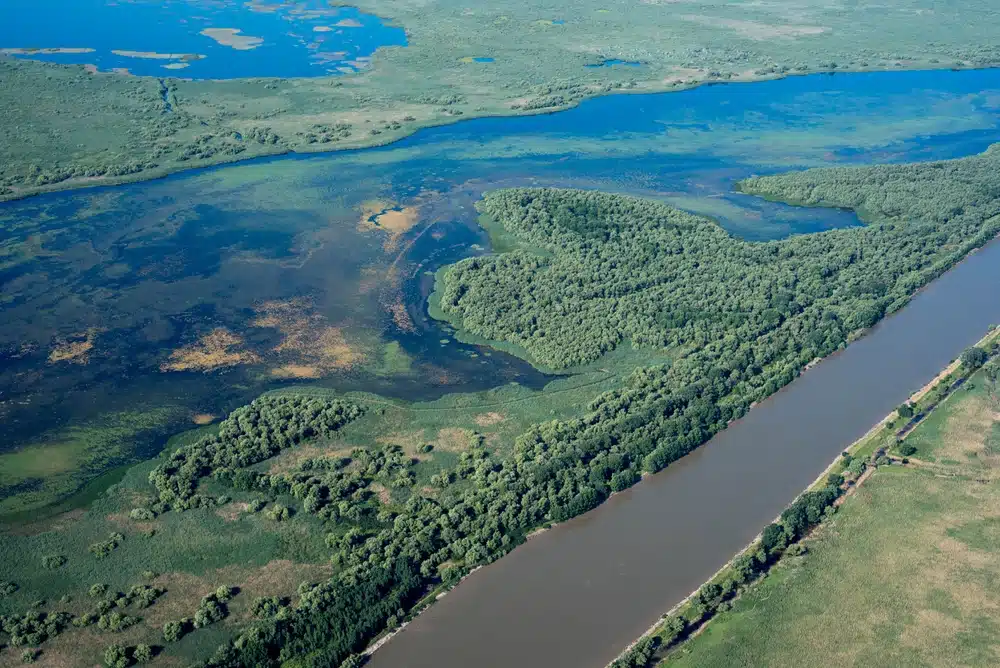
Aerial view of Danube Delta in spring
The seasonal dynamics of the reserve dictate what you will see and how you should prepare for the local conditions.
Depending on your interests—whether it is bird migration, photography, or enjoying the wild beaches—each period offers a distinct atmosphere as shown in the following overview:
Comparison of visiting seasons in the Danube Delta
| Season | Months | Highlights | Considerations |
| Spring | April – June | Bird migration and nesting activity; mild temperatures; exceptional light for photography | Widely considered the best season overall |
| Summer | July – August | Warmer temperatures; longer days; ideal for beach visits and water activities | Busiest months; accommodation books up quickly |
| Autumn | September – October | Migratory birds passing south; golden reed beds; excellent wildlife watching | Another excellent window; fewer crowds than summer |
| Winter | November – March | Quiet and atmospheric; rare species sheltering in the delta; fewer visitors | Some services operate on reduced schedules |
What Can You See During a Danube Delta Wildlife Watching Session?
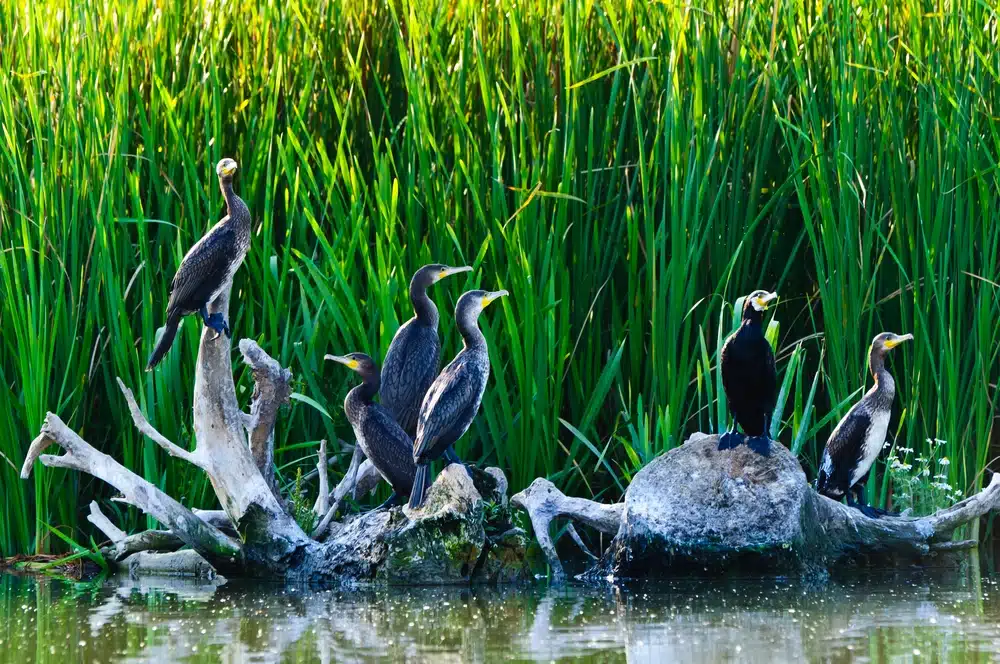
Cormorants in Danube Delta
The Danube Delta is a premier European destination for wildlife enthusiasts, hosting over 360 bird species, including the largest concentration of white pelicans on the continent. Beyond birds, the reserve functions as a complete wilderness where you can spot rare mammals and globally threatened species in their natural, undisturbed habitats.
The diversity of life in the delta is best observed through several iconic species and unique viewing opportunities:
- You can observe great white pelicans, globally threatened Dalmatian pelicans, white-tailed eagles, and iridescent glossy ibises.
- The landscape is home to elusive otters in the channels, wild boars in the forests, and the famous wild horses of the Letea area.
- While spring and autumn offer peak migration variety, winter provides a rare refuge for the striking red-breasted goose.
- Areas like Lake Hrecisca, Sacalin Island, and the Matița-Merhei lake complex are essential hotspots for nesting and feeding.
👉 Discover comprehensive data on bird species in the Reserve, their specific nesting habitats, and peak observation windows.
Which Are the Must-Visit Villages and Landmarks?
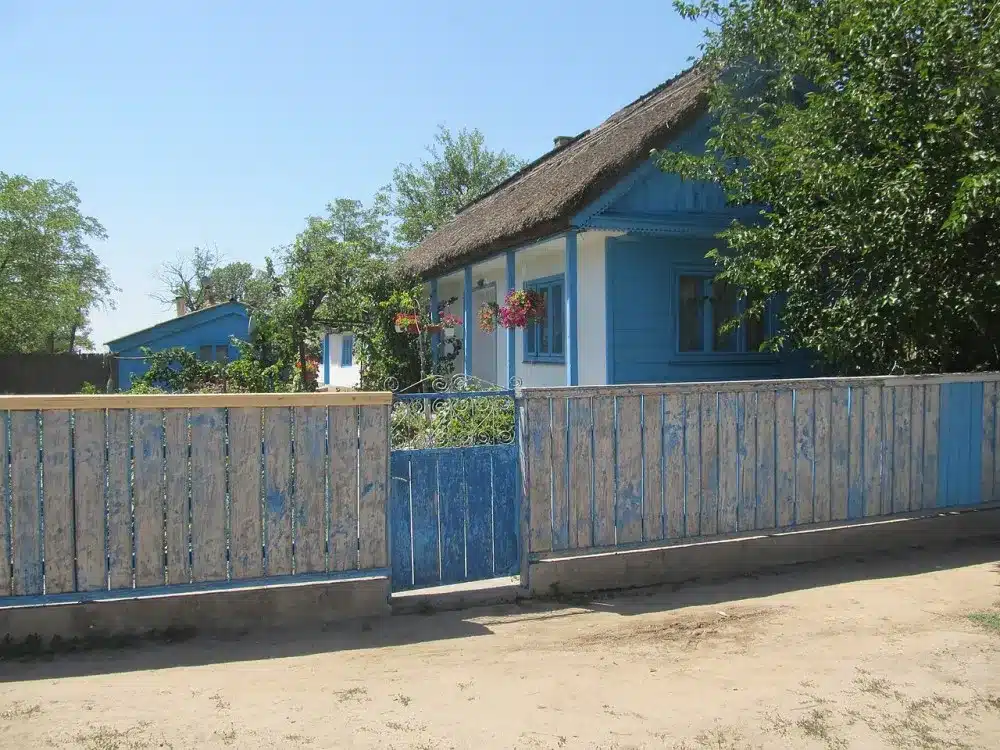
Traditional house in Letea, Danube Delta
The human geography of the Danube Delta is as compelling as its natural landscapes, featuring scattered communities that have preserved traditional ways of life for centuries. Exploring these villages transforms a standard wildlife tour into a rich cultural immersion, revealing unique histories and characters along the waterways.
Several unmissable settlements and natural landmarks define the authentic Danube Delta experience:
- Mila 23: An evocative Lipovan village, accessible only by boat, famous for its blue-and-white houses and as the birthplace of Olympic champion Ivan Patzaichin.
- Sulina: A historic town at the Black Sea confluence, featuring a 19th-century international cemetery, a Greek Church, and an 1802 lighthouse.
- Sfântu Gheorghe: A quiet fishing village founded in 1318, renowned for its traditional sturgeon soup (Storceag) and wild Black Sea beaches.
- Crișan: A central waypoint and fishery hub where you can rent traditional lotca boats to explore the Old Danube Canal and nearby lakes.
- Letea Forest: Romania’s oldest nature reserve, home to 500-year-old oaks, Mediterranean creepers, and nearly 2,000 free-roaming wild horses.
- Caraorman Forest: An ancient nature reserve in the Crișan area characterized by brown oaks, sandbanks, and a subtropical appearance.
👉 Read more about the subtropical landscapes of Letea Forest, where ancient oaks meet sand dunes and wild horses roam freely.
How Do You Choose the Right Danube Delta Tour for Your Adventure Style?
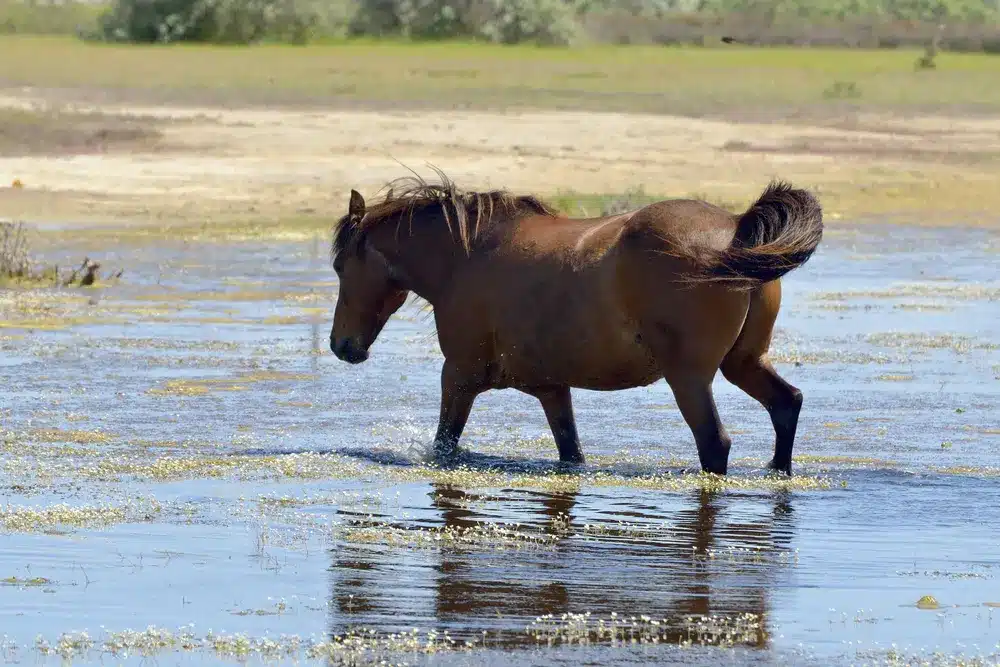
Wild horse in Letea Forest, Danube Delta
Selecting a tour style is a decisive factor for your holiday because the Danube Delta accommodates a wide range of travel personalities and your choice will shape the entire experience.
What Are the Specialist Wildlife and Birdwatching Tours?
These tours focus on maximizing sightings through dawn departures and expert naturalist guidance, making them ideal for serious observers.
Naturalist guides lead these excursions into productive wildlife areas while maintaining respectful distances from sensitive nesting and feeding grounds.
What Do Village-Focused Cultural Tours Include?
Cultural tours prioritize human geography through stops at traditional settlements like Mila 23, Sulina, and Sfântu Gheorghe.
These itineraries include ample time for exploring on foot, meeting local residents, and sampling regional gastronomy in family homes or small restaurants.
How Do Multi-Day Combination Tours Work?
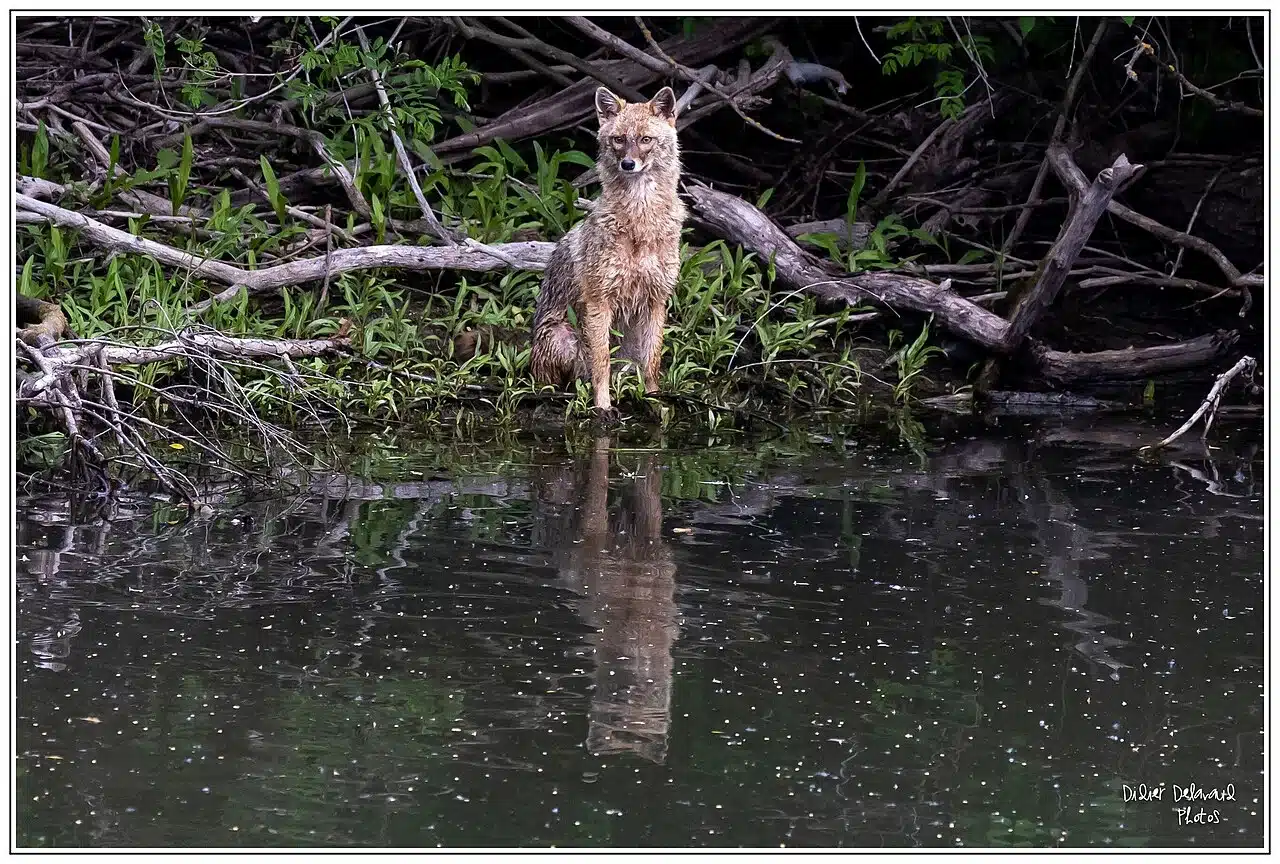
Jackal in Danube Delta
These comprehensive trips blend boat excursions with village visits, forest walks, and beach time over a period of four to seven days.
This format suits travelers who want to understand the delta as a complete ecosystem and cultural entity rather than focusing on a single specialized aspect.
What Other Activities Can You Enjoy?
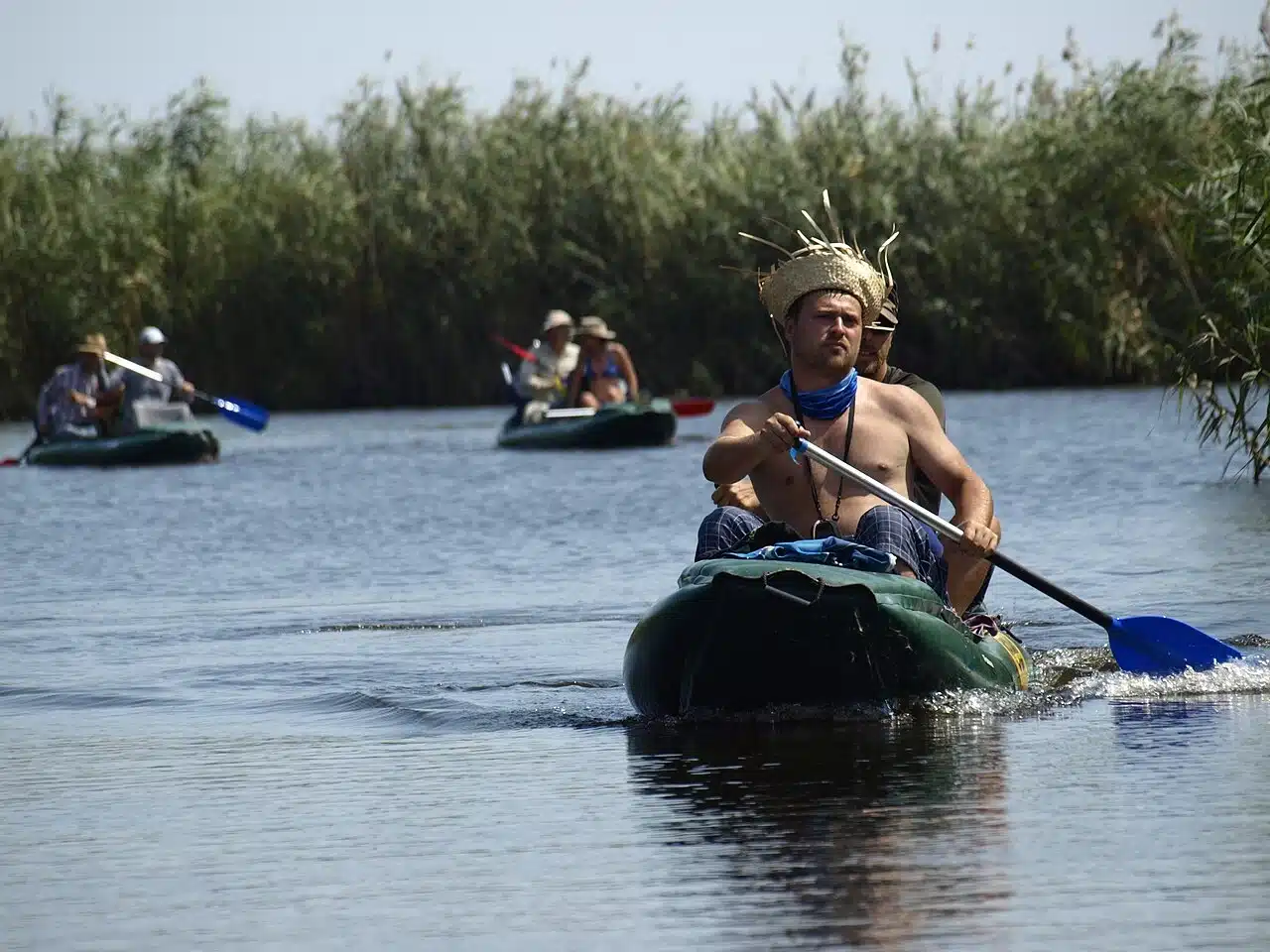
Kayaking in Danube Delta
While boat tours are the traditional way to explore, the Danube Delta offers a variety of slower-paced activities.
The most engaging land and water-based activities include:
- Recreational Fishing: Catch species like carp, pike, or catfish while surrounded by pelicans and herons.
- Kayaking and Canoeing: Navigate tight channels inaccessible to motorboats to hear nesting birds up close.
- Forest Hiking: Explore Letea’s ancient oaks, sand dunes, and Mediterranean creepers on foot.
- Wildlife Photography: Capture kingfishers, dragonflies, and wild horses at a quiet, undisturbed pace.
👉 Consult the full range of organized Danube Delta experiences at Dolphin Camping, including outdoor cinema screenings, kayak rentals, and tailored boat excursions.
Which Are the Best Danube Delta Accommodation Options?
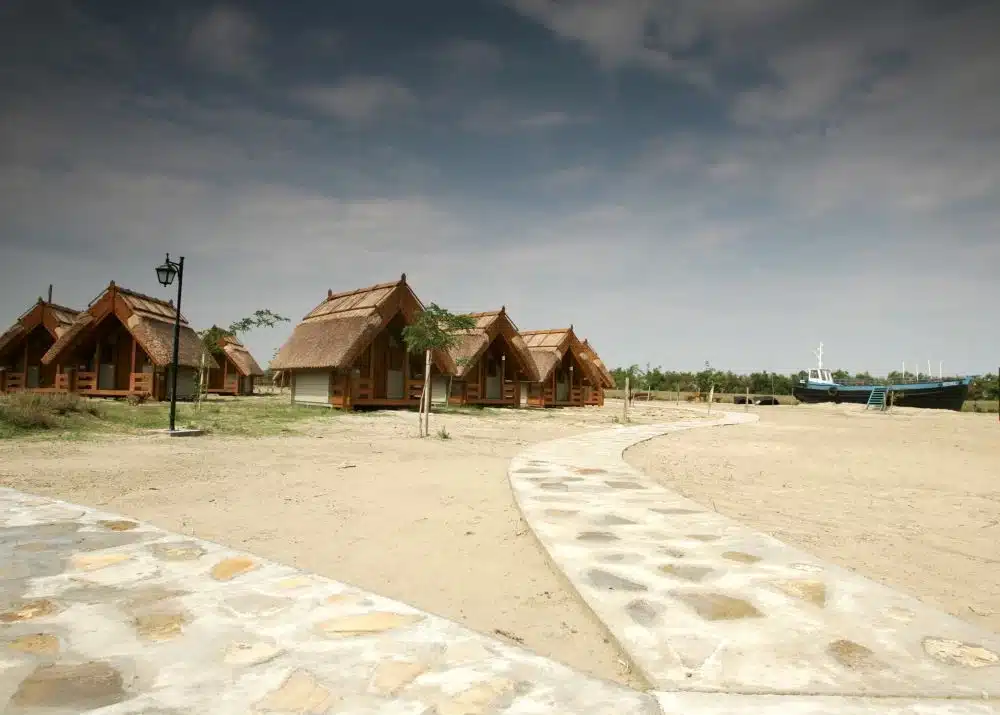
Green Dolphin Camping, Danube Delta
Choosing where to stay in the delta dictates your entire experience, with options ranging from authentic rural homes to upscale resorts.
Why Choose Tulcea Hotels for Your Stay?
These represent the most conventional lodging choices and provide the easiest access to land transportation and ferry connections.
They serve as a practical base if you have a late arrival or an early departure, though staying here means you miss out on the delta’s essential quality of absolute stillness.
What Do Traditional Village Guesthouses Offer?
Family-run properties in villages like Crișan, Mila 23, and Murighiol offer local expertise and home-cooked fish meals that no guidebook can replicate.
In these locations, hosts typically arrange your boat transportation, allowing you to wake up to the sounds of water and birds rather than city traffic.
Where Can You Find Upscale Delta Properties?
Locations such as Hotel New Lebada, Danube Delta Resort, and Delta Boutique & Carmen Silva in Crișan provide four-star amenities directly on the waterways.
These properties cater to travelers seeking high-end comfort and modern facilities while remaining in close proximity to the delta’s core exploration routes.
How Is the Experience at Green Dolphin Camping in Sfântu Gheorghe?
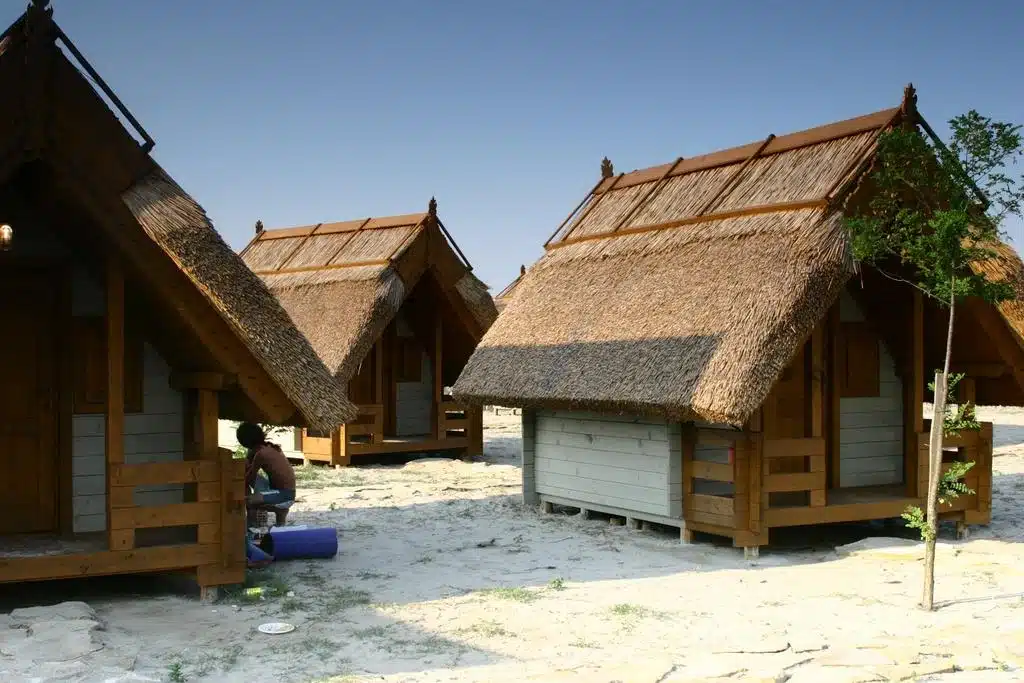
Bungalows in Dolphin Camping, Danube Delta
Part of the Green Village 4* Resort group, this site offers a unique mix of camping and cabin life in a wild beach setting accessible only by boat.
You benefit from modern amenities like a pool, jacuzzi deck over a lily lake, and Wi-Fi, alongside organized activities including outdoor cinema, kayaking, and birdwatching.
👉 Explore the specific details regarding cabin rentals and camping facilities available at the unique confluence of the Danube and the Black Sea.
Are There Campsites for Sleeping Under the Stars?
Dedicated campsites operate in Crișan, Murighiol, Sfântu Gheorghe, and along the shores of Lake Roșu for those who prefer a direct connection with nature.
These spots are ideal for visitors looking for a minimalist approach to the delta, focusing on the raw beauty of the landscape.
How Should You Prepare for a Danube Delta Trip?
You need to equip yourself for rapid weather changes, intense sun exposure, and the logistical realities of an isolated region.
Your packing list should include these specific items to handle the delta’s unique demands:
- Long-sleeved clothing
- Waterproof jacket
- Sun protection
- Mosquito repellent
- Binoculars
- Dry sack
- Cash in Romanian lei
- Bottled water
What should you expect regarding connectivity and the local pace?
The remoteness of the region requires a shift in your daily expectations:
- Limited connectivity: Modern infrastructure and consistent mobile signals are largely absent in the heart of the reserve.
- Slower pace: Activities and plans often change based on environmental factors like water levels or sudden storms.
- Natural rhythms: Life in the delta operates on its own terms, often ending the day when the natural light fades.
How to Apply These Practical Tips
- Reserve your ferry or private boat from Tulcea in advance.
- Purchase mandatory ARBDD visitor permits online before your arrival.
- Bring long sleeves for mosquitoes and a waterproof jacket for boats.
- Withdraw Romanian Lei in Tulcea as villages rarely accept cards.
- Arrange early morning tours with local guides for peak wildlife.
FAQs About Visiting the Danube Delta
What are the specific camping regulations for tourists bringing their own tents?
Camping is restricted to authorized grounds in local villages or ARBDD-approved sites. You are prohibited from setting up tents on wild beaches or within protected reserve zones.
What emergency medical transport options are available inside the delta?
Emergencies are handled by the Tulcea County Ambulance watercraft or SMURD helicopters for critical cases. While villages have dispensaries, serious conditions require rapid boat transfer to Tulcea County Hospital.
Is it allowed to bring pets into the reserve and on boats?
Pets are generally permitted, though individual boat operators and guesthouse owners often set specific rules or fees. You must keep animals supervised to prevent them from disturbing nesting birds or wild fauna.
How do electricity and internet connectivity work in remote delta villages?
Most villages use the national grid, but storms can cause outages; most guesthouses provide local Wi-Fi. Mobile signals fluctuate wildly and often vanish completely in deep reed beds or near the border.
Are there any specific seasonal health risks like malaria or tick-borne diseases?
Malaria is non-existent, but ticks are common in high grass and forested areas like Letea. Use repellent and wear long trousers during forest hikes to effectively manage these local risks.
Photo source: Green Dolphin Camping, DepositPhotos, Wikimedia Commons